Author Archives: Owen

Zelda's Adventure DX Revives CD-i Classic on Game Boy

Zelda's Adventure DX Revives CD-i Classic on Game Boy

From the RetroShell news archive. Originally published 2025-11-12 on our former news site and restored here.

Zelda’s Adventure DX brings one of gaming’s most obscure chapters to Game Boy Color with a remarkable fan-made port that transforms the infamous CD-i title into a proper handheld adventure.

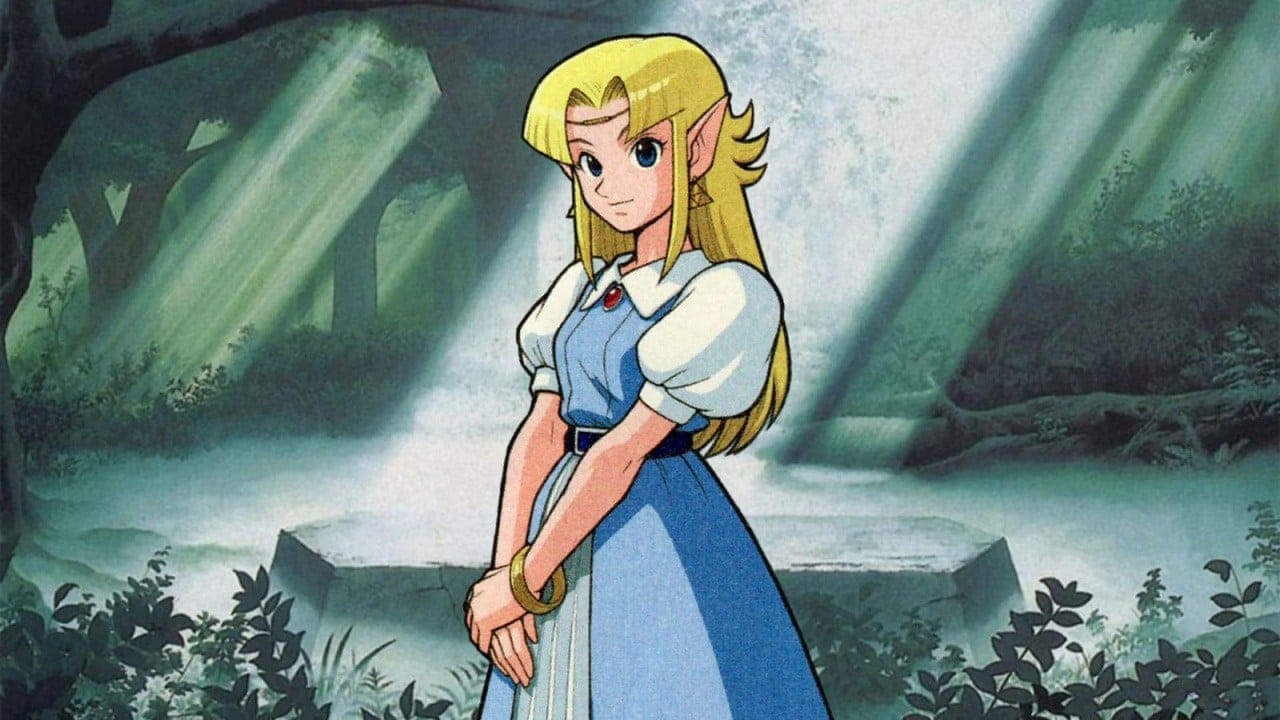
Developer John Lay has successfully translated the 1996 Philips CD-i game into a colourised Game Boy experience, complete with visual enhancements and bug fixes that address the original’s notorious shortcomings. This unofficial project represents a fascinating piece of gaming preservation, rescuing a title that many considered lost to the annals of questionable licensed games.

Lay explains his motivation simply: “Zelda’s Adventure looked interesting and I thought it would be fun to play on a portable system. I chose the Game Boy because of the existing Zelda games on the system.” Using GB Studio as his development platform, he’s created a version that adopts the visual style of Link’s Awakening while incorporating features from Oracle of Ages and Oracle of Seasons. The result feels surprisingly authentic to Nintendo’s handheld Zelda lineage, despite originating from one of the most maligned corners of Zelda history.

The original Zelda’s Adventure emerged from the complicated fallout of Nintendo’s abandoned SNES CD-ROM project. After famously walking away from partnership talks with Sony, Nintendo struck a deal with Philips that ultimately allowed the electronics company to create CD-i titles using Nintendo properties. Developed by Viridis Corporation with zero input from Nintendo, the game featured office receptionist Diane Burns as Zelda and elaborate model work by Hollywood effects artist Jason Bakutis. Bakutis recalled in a 2012 interview: “We had, at the time, the biggest budget ever for a video game. At one point, the owners told me they were talking to this band Echo and the Bunnymen about doing the soundtrack.”

This DX version represents more than just a colour palette swap; it’s a thoughtful reimagining that makes the game actually playable on Nintendo’s classic handheld. Players can download the ROM to experience it through emulation or on original Game Boy hardware using a flash cart. Meanwhile, the project serves as a fascinating footnote in gaming’s alternative history, demonstrating how passionate developers can breathe new life into even the most forgotten corners of retro gaming.
Sign up for our free weekly Retro Gaming Substack and get all of the weeks hottest news delivered to your inbox each Monday.

Indie Sega Genesis Game Revives Sonic Lock-On Tech

From the RetroShell news archive. Originally published 2025-11-04 on our former news site and restored here.

Indie Sega Genesis / Mega Drive game Arkagis Revolution has remarkably revived Sonic & Knuckles’ legendary lock-on technology, allowing players to unlock a secret bonus game when combined with the classic.

This 2023 release from Broke Studio’s Homebrew Factory faithfully recreates one of gaming’s most inventive hardware features, delivering genuine retro innovation for modern collectors.

While Sega’s original decision to split Sonic 3 attracted criticism, the lock-on cartridge system remains one of gaming’s most brilliant hardware innovations. The ability to physically combine cartridges and unlock bonus content created magical moments that digital downloads simply cannot replicate. Consequently, discovering that an independent developer has resurrected this feature feels like uncovering buried treasure.

Arkagis Revolution itself is a top-down shooter boasting impressively smooth Mode 7-style rotation effects that push the 16-bit hardware. However, its true genius emerges when connected to Sonic & Knuckles, where it unlocks a secret game blending Sonic’s bonus stages with its own shooting mechanics. This clever fusion demonstrates both technical prowess and genuine affection for Sega’s heritage.

Furthermore, the game is available through Broke Studio’s Homebrew Factory for dedicated collectors, while mainstream players can access the base game on Mega Cat Studios Collection 2 for Evercade.

The revival of lock-on technology represents more than mere nostalgia; it’s a testament to independent developers pushing vintage hardware beyond its original boundaries. Meanwhile, this inventive approach to game design reminds us why physical media and hardware innovations created such enduring memories during gaming’s formative years.

Sign up for our free weekly Retro Gaming Substack and get all of the weeks hottest news delivered to your inbox each Monday.

Dark Empires Sega Mega Drive RTS Prototype Preserved

From the RetroShell news archive. Originally published 2025-11-04 on our former news site and restored here.

Dark Empires, Sega Technical Institute’s long-lost Mega Drive/Genesis real-time strategy game, has finally emerged from the shadows after three decades.

The dragon-based RTS prototype, cancelled in 1991, has been preserved and released online by the gaming historians at Hidden Palace in collaboration with Sega Retro researcher Alexander Rojas, offering gamers a fascinating glimpse into what might have been.

Originally conceived in 1990, Dark Empires represented one of the earliest projects from Sega’s North American studio established by Mark Cerny. The game was the brainchild of designer Bill Dunn, whose passion for tabletop gaming heavily influenced the project. Development involved future Insomniac Games artist Craig Stitt alongside programmers Scott Chandler and Ken Rose, creating an impressive pedigree for this forgotten gem.

The prototype reveals a game heavily inspired by Technosoft’s cult classic Herzog Zwei, focusing on strategic battles between warring dragon factions across different historical eras. However, despite reaching a playable state, the project was abruptly cancelled in late 1991. Stitt later reflected that the niche nature of real-time strategy on consoles likely contributed to its demise, suggesting it didn’t align with Cerny’s broader vision for the studio.

Interestingly, elements of Dark Empires found new life in subsequent projects. The core concept of a dragon journeying through different time periods bears striking resemblance to Stitt’s initial pitch for what eventually became Spyro the Dragon at Insomniac. That original concept, entitled Lifespan, similarly involved guiding a dragon through historical settings like the Civil War while accumulating treasure.

Stitt acknowledged this connection in an August interview with Rojas, noting that while it wasn’t a conscious decision, he believes there’s definitely a link between the two dragon-centric projects. This revelation adds another layer to gaming history, showing how cancelled concepts can sometimes evolve into beloved franchises.

The preservation of Dark Empires represents another victory for gaming historians and enthusiasts. Meanwhile, initiatives like the work at Hidden Palace continue to ensure that even failed projects find their place in gaming’s rich tapestry, reminding us that every cancelled game carries lessons and inspiration for future creations.

Sign up for our free weekly Retro Gaming Substack and get all of the weeks hottest news delivered to your inbox each Monday.

Hollow Knight: Silksong gets stunning N64 demake

From the RetroShell news archive. Originally published 2025-10-31 on our former news site and restored here.

A striking fan demake by Brazilian creator Gustavo ‘Botão Select’ Barros reimagines Hollow Knight: Silksong on Nintendo 64, turning the Moss Grotto into a low-res, polygonal showcase. It’s a period-perfect scene—not yet a game—highlighting retro aesthetics and modern admiration.

Created by Brazilian developer Gustavo Barros, known online as Botão Select, this fan project perfectly captures the distinctive aesthetic of Nintendo’s iconic console. The demake transforms the vibrant Moss Grotto location into a muted, low-resolution spectacle complete with the characteristic polygon-heavy textures that defined mid-90s gaming.

Hollow Knight: Silksong (1997) on Nintendo 64 pic.twitter.com/ktr5K59Mwt

— guselect (@guselect) October 29, 2025

Barros meticulously recreated the visual style that made N64 games instantly recognisable, though he’s confirmed this remains “more of a scene than a game” currently. In his YouTube demonstration, available in Portuguese, he showcases the technical achievement while noting he’ll “think about” developing a full playable version. The attention to period-accurate graphical limitations demonstrates both technical skill and genuine affection for retro gaming aesthetics.

However, imagining Silksong’s notorious difficulty paired with N64 controls creates genuine concern among seasoned players. The original Hollow Knight already presented significant challenges, and its sequel promises even greater tests of skill. Fifth-generation controllers, with their awkward analog sticks and limited button layouts, would transform Silksong’s precise platforming into what might become gaming’s ultimate endurance test.

Meanwhile, modern gaming continues to embrace retro influences while maintaining contemporary control precision. This demake serves as both tribute and terrifying thought experiment, reminding us how far gaming technology has evolved. The project stands as impressive fan art that beautifully bridges generations of game design, even if playing the full game with N64 hardware might remain an exercise in masochism.

Sign up for our free weekly Retro Gaming Substack and get all of the weeks hottest news delivered to your inbox each Monday.

Google Unveils Playable PAC-MAN Halloween 2025 Doodle

From the RetroShell news archive. Originally published 2025-10-30 on our former news site and restored here.

Google is celebrating Halloween this year by transforming its homepage into a haunted arcade, launching the PAC-MAN Halloween 2025 Edition. The special, playable Google Doodle will go live on 31 October 2025, offering a spooky take on the beloved classic which first launched over four decades ago.

This festive edition sees PAC-MAN navigating a dimly lit, graveyard-themed maze, a stark change from the simple black-and-blue corridors of the original. The familiar quartet of ghostly adversaries has also received a monstrous makeover; players will find themselves pursued by a vampire, a witch, a stitched-up Frankenstein-like monster, and a classic sheet ghost. In keeping with the theme, the traditional Power Pellets have been replaced with glowing Jack-o’-lanterns, giving PAC-MAN the power to turn the tables on his supernatural hunters.

The game mechanics remain faithful to the timeless original, but all the bonus items have been swapped for Halloween treats, adding a fresh visual flavour to the experience. This marks another interactive and nostalgic celebration from the Google Doodle team, who are known for creating engaging and often educational diversions on the world’s most visited webpage.

As the Doodle goes live for one day only, fans of the arcade legend will have a limited time to chase high scores and gobble up all the ghoulish goodies. It’s a charming tribute that expertly blends the spirit of Halloween with one of the most recognisable icons in gaming history.

Super Station One Eliminates CD Load Times on MiSTer FPGA

Super Station One Eliminates CD Load Times on MiSTer FPGA

From the RetroShell news archive. Originally published 2025-10-24 on our former news site and restored here.

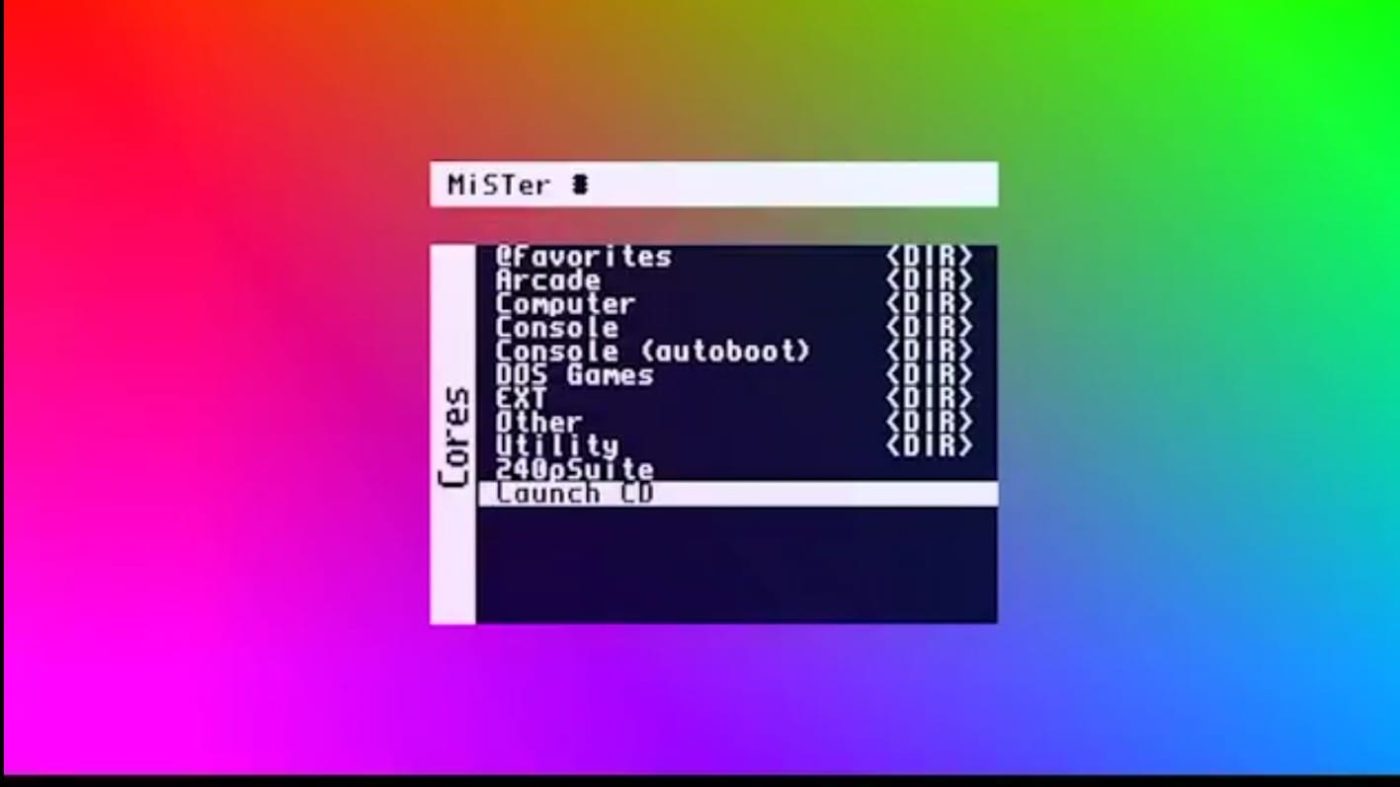
A breakthrough update for the Super Station One has effectively eliminated one of the last remaining relics of retro disc-based gaming: the loading screen. Developed by the team at Retro Remake, this MiSTer FPGA compatible console can now load CD-ROM games from its optional dock at speeds comparable to a solid-state drive, making for a seamless gameplay experience.

The Super Station One is a standalone console built to accommodate the popular open-source MiSTer FPGA platform, which recreates classic games consoles on a hardware level for maximum accuracy. While the MiSTer project has long mastered cartridge-based systems, the nuances of CD-based platforms like the PC Engine CD-ROM² and PlayStation have presented lingering challenges, including authentic, and often lengthy, loading times. This latest software improvement reportedly bypasses previous bottlenecks, allowing the system’s optional ‘SuperDock’ accessory to serve game data from its m.2 SSD at an unprecedented rate. The result is that across almost all supported CD-based systems, loading times are now practically non-existent.

According to the developer, the only core with any perceptible difference is for the original PlayStation, where in some rare edge-cases performance might be a fraction of a percent slower, occasionally causing a sub-second pause. For every other compatible core, the performance is said to be indistinguishable from loading directly from the MiSTer’s primary SD card.

The Super Station One console is available from the creator’s official website, with the standard edition priced at $225 (Approx. £180 / €210 / $225, based on current exchange rates; check local retailers for exact pricing). This latest advancement marks a significant quality-of-life improvement for the FPGA community, bringing modern convenience to the hardware-perfect replication of classic CD gaming.

Super Mario Bros. 3 NES Revisions Explained (Rev 0 vs Rev 1)

Super Mario Bros. 3 NES Revisions Explained (Rev 0 vs Rev 1)

From the RetroShell news archive. Originally published 2025-04-15 on our former news site and restored here.

More Than Just a Label: Unpacking Mario 3’s Cartridge Secrets.

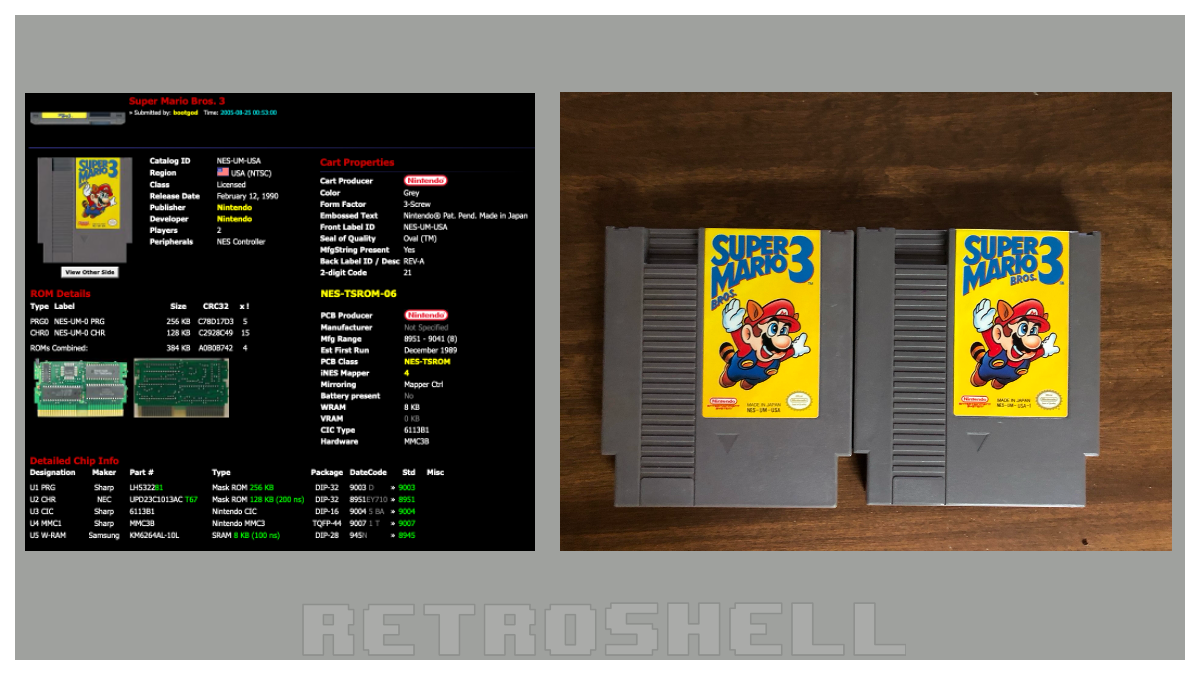
Cast your mind back to early 1990. The hype surrounding Super Mario Bros. 3 for the Nintendo Entertainment System (NES) was palpable. Securing a copy upon its North American release on 12 February 1990 often involved frantic phone calls to retailers, hoping for stock. Yet, unbeknownst to many eagerly unwrapping their prize, not all cartridges were created equal. Look closely at two seemingly identical US carts, and you’ll spot tiny discrepancies: the placement of “Brothers” beneath the title, a ™ versus an ® symbol near the Nintendo seal, and crucially, a small suffix on the label code – “NES-UM-USA” versus “NES-UM-USA-1”. This “-1” signifies Revision 1, a tweaked version of the game released mere months after its debut.

These revisions weren’t just cosmetic. Delving into the game code reveals specific alterations, ranging from amusing localisation quirks to minor bug fixes. One of the most discussed changes involves the nomenclature surrounding a certain boot. In the initial release (Revision 0), after clearing World 2, the Princess sends a letter mentioning the ability to stomp enemies using “Kuribo’s Shoe”. Kuribo, being the original Japanese name for the common Goomba enemy. Revision 1 corrects this, changing the text to “Goomba’s Shoe”, accurately reflecting the creature found hopping within it in World 5-3. Curiously, this correction wasn’t permanent; 1993’s Super Mario All-Stars on the Super Nintendo (SNES) seemingly reverted to the Revision 0 script, bringing “Kuribo’s Shoe” back. It wasn’t until Super Mario Advance 4 on the Game Boy Advance (GBA) in 2003 that “Goomba’s Shoe” made its definitive return in this context, albeit with the letter’s placement shifted back to match the original Famicom version.

Another textual tweak addressed a slightly awkward instruction in the Spade Panel bonus game. Revision 0 bluntly stated, “Miss twice and you’re out”. Revision 1 smoothed this out to the clearer “You can only miss twice”. Again, Super Mario All-Stars strangely favoured the original, less polished phrasing. Beyond these specific lines, the names given to the eight worlds upon completing the game also saw adjustments between revisions and even compared to Nintendo’s own strategy guide, with names like “Desert Land” becoming “Desert Hill” (though the video mentions “Kupahari Desert” perhaps from the guide?) and “Pipe Land” changing to “Pipe Maze”.

But when did Revision 1 actually appear? Analysis of the date codes stamped onto the ROM chips inside the cartridges provides clues. Revision 0 cartridges contain Program (PRG) and Character (CHR) ROMs manufactured from late 1989 into early 1990 (Week 52 ’89 up to at least Week 10 ’90, roughly early March). Revision 1 cartridges, however, show later dates. Data collated on sites like the NES Cart Database suggests the earliest known Rev 1 PRG ROM dates to Week 24 of 1990 (early June). This pinpoints the production shift to sometime between March and June 1990, meaning Revision 1 cartridges likely hit shop shelves in the summer of that year.

Perhaps the most technically intriguing change was a bug fix targeting World 7-1’s vertically scrolling pipe section. In Revision 0, if Mario entered this area holding reserve item cards (earned from mini-games), those cards would bafflingly disappear from the status bar at the bottom of the screen. This occurred because the code responsible for drawing the card graphics mistakenly wrote them to the wrong memory address within the NES’s video RAM (VRAM) during this specific vertical scrolling segment, effectively overwriting them with level background data. The code correctly rendered Mario or Luigi’s initial (‘M’ or ‘L’), lives, score, etc., to the correct status bar address, but the cards got misplaced. Revision 1 implemented a small code correction, ensuring the card graphics were drawn to the proper VRAM location, thus remaining visible. This fix required only seven bytes of new code, cleverly repurposed from unused space at the end of the ROM.

These variations offer a fascinating glimpse into game development and localisation during the pre-internet era, where updates meant manufacturing entirely new physical cartridges. So, next time you see a copy of Super Mario Bros. 3, check the label – you might just hold a slightly different piece of gaming history.

Full credit to Displaced Gamers for sharing these insights in the below video, if you like their work you can become a Patreon.

Fan-Mod "Manall's FF1 Hack" Modernizes Original Final Fantasy with Class Revamps and Tactical Combat

Fan-Mod "Manall's FF1 Hack" Modernizes Original Final Fantasy with Class Revamps and Tactical Combat

From the RetroShell news archive. Originally published 2025-04-01 on our former news site and restored here.

Want a retro challenge? Manall has got you covered…

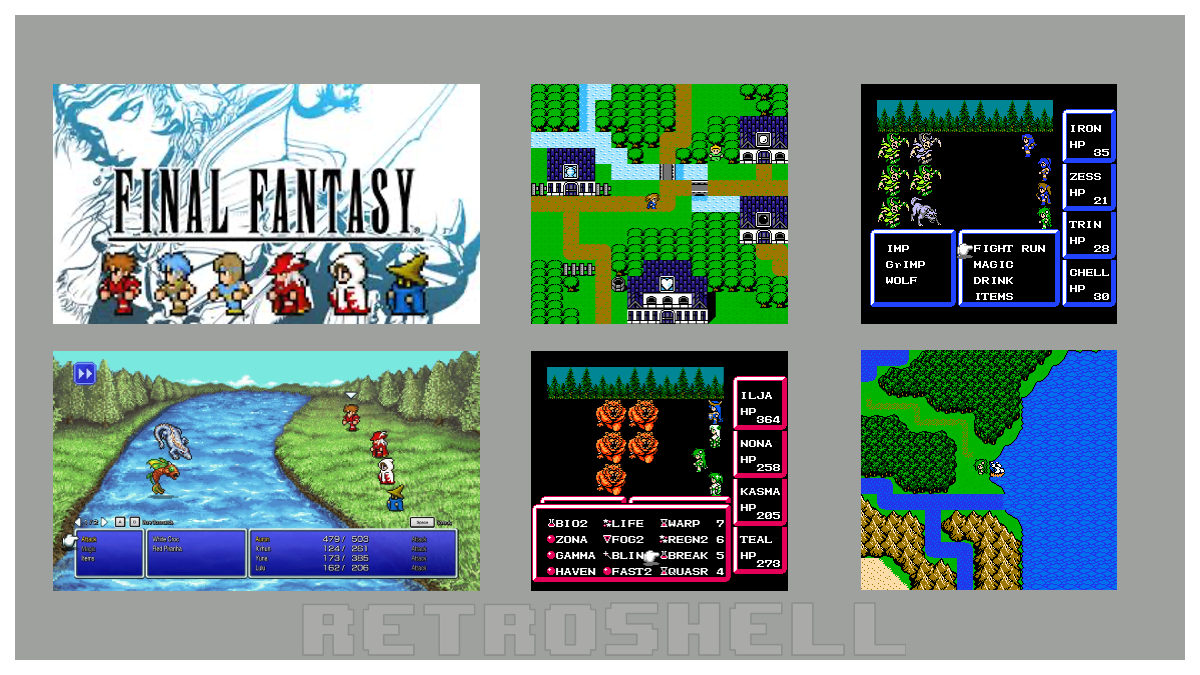
A comprehensive overhaul mod for Final Fantasy I (1987), titled Manall’s FF1 Hack, has been released, offering veteran players and newcomers a rebalanced, strategically deeper take on Square Enix’s foundational RPG. The mod replaces underused classes, overhauls combat mechanics, and introduces quality-of-life improvements while preserving the core identity of the NES classic.

Background and Features

Originally released in 1987, Final Fantasy I established core JRPG mechanics like turn-based combat and job classes. Manall’s mod reimagines these systems, swapping the Black Belt and Red Mage for the Archer and Green Mage to improve party synergy. Spells, items, and equipment have been redesigned for relevance, with elemental roles and status effects like Regen and Reflect adding tactical depth. Combat now uses a sequential turn order, and enemies—including regenerating foes and smarter AI spellcasters—pose a steeper challenge without requiring excessive grinding.

The mod also restores cut content and integrates fan-requested conveniences, such as docking the ship on any shoreline, dirt roads that reduce random encounters, and adjustable menu colors. A bundled guide and maps replace the NES version’s physical manuals, aiding navigation through the game’s redesigned world.

Technical Details and Compatibility

Manall’s FF1 Hack requires the Final Fantasy (USA) ROM (No-Intro Database) and is compatible with emulators like NestopiaFCEUXMesen, and Delta (iOS). A custom color palette must be applied for optimal visuals. Notably, version 3.4 saves are incompatible with prior iterations, requiring a fresh playthrough. You can download the game here.

Why This Matters

This mod exemplifies the RPG community’s enduring passion for revitalising classics. By addressing dated design while respecting the original’s spirit, it offers a bridge between retro charm and modern expectations. Similar projects, like Final Fantasy: Brave New World, highlight a growing trend of fan-driven rebalancing in aging titles.

Lost Mega Man Legends Mobile Game Rockman DASH: 5 Islands Receives English Translation Patch

From the RetroShell news archive. Originally published 2025-04-01 on our former news site and restored here.

Not all heroes wear capes, some translate lost games

A collaborative effort by game preservationists has brought Rockman DASH: Great Adventure on 5 Islands—a long-unavailable mobile entry in the Mega Man Legends series—to English-speaking audiences for the first time. The patch, developed by translator Mega Alex and preservation group SciLab Secrets led by RockmanCosmo, revives the 2008 Japanese feature phone title, once considered lost after Capcom delisted it in 2018.

Background and Significance

Originally released episodically for i-mode phones, 5 Islands bridges the stories of Mega Man Legends and its sequel. Set across five explorable islands, the game features 35 missions, weapon crafting, and characters like Denise Marmalade from The Misadventures of Tron Bonne. Despite hardware limitations, it replicates the 3D action and charm of the mainline Legends games, which have maintained a cult following since their PlayStation releases in the late 1990s.

After Capcom removed its i-mode catalog in 2018, 5 Islands survived only on legacy devices until SciLab Secrets preserved a complete copy in 2023. The newly released English patch builds on a decade-old partial translation by Midori, with Mega Alex expanding it to include menus, NPC dialogue, and technical fixes.

Technical Challenges and Features

Creating the patch required editing proprietary file formats using hex editors, as explained in SciLab Secrets’ preservation notes. Space constraints and coding hurdles—such as adjusting string lengths to fit English text—were resolved by preservationist Yuvi, who also developed the Keitai World Launcher to emulate the game on modern Windows systems. Players can choose between “delocalized” (Rockman, Kobun) or “localized” (Mega Man, Servbot) naming conventions.

How to Play

The patch is accessible via Yuvi’s Keitai World Launcher, which supports controller mapping and screen scaling. Players are advised to frequently interact with NPCs, whose dialogue evolves between missions, and experiment with special weapons to uncover breakable walls. Audio glitches can be resolved through the in-game options menu.

Why This Matters

The restoration of 5 Islands underscores the importance of game preservation, particularly for titles tied to defunct platforms. For Mega Man Legends fans, it offers a nostalgic, if technically dated, expansion of the series’ lore. With Capcom yet to revisit the Legends franchise since 2011’s Misadventures of Tron Bonne re-release, projects like this highlight fan-driven efforts to keep its legacy alive.

After 1 Year An English Translation Patch Released for ‘Capcom vs. SNK 2’ on Sega Dreamcast Is Here!

From the RetroShell news archive. Originally published 2025-03-31 on our former news site and restored here.

A complete translation available for the first time!

A comprehensive English translation patch for Capcom vs. SNK 2: Millionaire Fighting 2001 on the Sega Dreamcast has been released, offering English-speaking players an enhanced and fully localised gaming experience, as reported on RetroRGB.

Capcom vs. SNK 2, originally launched in 2001, is a renowned 2D fighting game that brings together characters from Capcom and SNK franchises. While the PlayStation 2 version received an official English localisation, the Dreamcast version remained exclusive to Japan, leaving non-Japanese speakers without a translated version. 

This new patch, developed over a year by Derek Pascarella, addresses this gap by providing a polished English translation. Key features of the patch include: 

• Complete Translation of Post-Win Quotes: The patch translates approximately 5,100 post-match dialogues, which were previously omitted or condensed in official localizations. These dialogues offer character-specific interactions, enhancing the depth and authenticity of the game. 

• Refined Game Texts: Beyond dialogues, all in-game texts, including special move command lists and end-game cutscenes, have been meticulously translated and, in some cases, retranslated to improve accuracy and clarity. 

• Bonus Content Integration: The obsolete “Network Mode” has been replaced with a “Bonus Mode,” featuring a 100% unlocked save file, an English-subtitled Japanese TV commercial, and translated interviews from the 2001 “Another Play Guide,” providing insights from the game’s original development team. 

The development team aimed to create the definitive home version of Capcom vs. SNK 2 for the Dreamcast. Given the console’s near arcade-perfect port and the addition of previously untranslated content, this patch is poised to become the preferred choice for fans. 

For those interested in applying the patch you can visits Derek Pascarella’s Github page and you can support his ongoing translation efforts by visiting DreamcastForever.com and selecting “contact” so you can get the donation link.

This release not only enriches the gaming experience for English-speaking audiences but also underscores the enduring dedication of the gaming community to preserve and enhance classic titles.

“Love Retro? Get all the latest Retro Gaming news delivered to your email each Monday, simply subscribe to our mailing list and we will take care of the rest. You can also follow us on XInstagramYouTube, and Bluesky.”