Author Archives: Owen

👾 Retro Gaming Weekly News #0181

From the RetroShell news archive. Originally published 2025-12-29 on our former news site and restored here.

Coming to you live from Malaysia, welcome to issue 181. My retro gaming finds have been somewhat limited in Malaysia thus far, and Laos is not reccomended for retro game hunting (but is recommended for many other things).

In this weeks issue we have how retro gaming helps fight burnout , is the Analogue 3D retro gaming hardware of the year(?), an even bigger Lego Game Boy and a lot more.

Thats as ever to you all for reading, there have been times this year when I have come close to stopping this (the amount of time it takes versus the number of subscribers I have hardly makes it worthwhile, but I am very determined to continue) – but a like, comment (feel free to let me know how I can make this better) or an email alert for a new subscriber, gives me a power up ❤️.

News

🕹️ New gameplay footage of the unreleased Famicom JRPG Dream Traveler: Midnight Adventure has surfaced online, showcasing turn-based battles and anime-style graphics — unseen for over 30 years. GoNintendo

🛫 Boston Logan Airport has installed free-to-play arcade cabinets featuring retro games to entertain travelers during layovers and delays. Retroshell

🐉 Dragon Ball Super Saiyan Goku: Kakusei — an unreleased Famicom RPG — revealed a drastically different original character design for Goku in newly discovered assets. CBR

👻 ESP Soft has released Sweet Horror, a haunted house text adventure game for the Amstrad CPC, complete with sound effects and hand-drawn graphics. Retroshell

🎮 The Analogue 3D is praised as the best retro gaming hardware of 2025, offering FPGA-based N64 gameplay with modern enhancements. Time Extension

🏍️ A new Super Hang-On-style racing game titled Speed Racing has arrived for the Commodore 64, featuring smooth scrolling and multiple tracks. Retroshell

🦁 Sabre Wulf has received a visually impressive remaster for the Commodore 64, courtesy of the Genesis Project team. NotebookCheck

📼 Lost ZX Spectrum prototypes Thomas the Tank Engine and Sooty & Sweep 2 have been recovered and released by preservationists. Retroshell

🎲 The Super Game Boy has been reimagined as a massive handheld device capable of playing original arcade titles (below). Yanko Design

🔧 A teardown of the Analogue 3D reveals its use of an open-source Bluetooth stack, allowing for extensive controller compatibility. Retroshell

🧪 An unofficial PC port of Dr. Mario 64 is now available for download, featuring improved resolution and performance on modern systems. DSOGaming

🧝 The full decompilation of The Legend of Zelda: Twilight Princess paves the way for native ports and modern enhancements. Retroshell

👕 UNIQLO is launching a Pokémon 30th Anniversary UT Collection featuring designs inspired by every generation of the franchise. Lifestyle Asia

🧩 Classic PlayStation puzzle game Intelligent Qube is returning on April 26, remastered with updated graphics and new features. Retroshell

⚠️ The upcoming sequel to the controversial SNES game Harvester has been delisted from Steam due to undisclosed reasons. OpenCritic

🧛 A new ROM hack of Gargoyle’s Quest adds full Super Game Boy support with custom palettes and borders. Retroshell

📦 The Analogue Pocket now supports cartridge dumping, allowing users to back up their Game Boy games digitally. Time Extension

⚾ A rare Hanshin Tigers-themed GameCube console has surfaced online, showcasing unique branding and packaging. Retroshell

Features

🎮 Shuntaro Furukawa’s rise from a childhood Famicom enthusiast to the CEO of Nintendo highlights a lifelong passion turned leadership at one of gaming’s most iconic companies — The Tradable

🥋 After leaving Capcom, Street Fighter creator Takashi Nishiyama launched Fatal Fury, a 1991 arcade hit that helped redefine fighting games — ComicBook.com

🎄 A long-time Nintendo fan reflects on a cherished holiday ritual of replaying a specific SNES game every Christmas — Nintendo Life

🧠 A recent study suggests that revisiting nostalgic 1980s video games can help reduce burnout and boost mental well-being — Newsweek

🕹️ Released 37 years ago, Mega Man 2 is credited with rescuing the franchise from cancellation and establishing its long-term success — ComicBook.com

⚔️ Frequently cited as the best SNES game ever, Chrono Trigger remains one of the most powerful and influential RPGs in gaming history — CBR

🚫 The fan-made web version of GTA: Vice City has been taken offline following a DMCA takedown request — Yardbarker

📈 The Evercade handheld and console ecosystem saw its strongest year in 2025, with significant releases and growing community support — Games Asylum

Lists & Rankings

🎮 A look at Nintendo’s lesser-known pre-Mario titles highlights the company’s early ventures into arcade and console gaming, from games like Sheriff and Devil World to Urban Champion — SVG

🐵 Every Donkey Kong game is ranked, showcasing the franchise’s evolution from arcade roots to modern platformers and spin-offs — ComicBook

🧩 A scrapped data transfer feature in Banjo-Kazooie called Stop ‘N’ Swop was originally intended to connect with Donkey Kong 64, revealing deeper ties between Rare’s N64 games — GoNintendo

🧻 A retrospective on South Park for the Nintendo 64 revisits the controversial FPS’s crude humor, unique snowball mechanics, and impact on adult-themed gaming in the late 1990s — ComicBook

📘 Five standout GameCube games are explored for their surprisingly deep narratives, with titles like Baten Kaitos and Eternal Darkness receiving praise for storytelling — ComicBook

🎬 A roundup of the top 10 movie-based video games highlights titles that managed to rise above typical licensed fare, including GoldenEye 007 and Spider-Man 2 — Yardbarker

🕹️ A look at canceled game consoles reveals obscure systems like the Sega Neptune and Nintendo PlayStation that never reached the market — GameRant

⚠️ A list of controversial retro games explores titles like Night Trap and Custer’s Revenge, which drew criticism for violence, sexual content, or cultural insensitivity — SVG

🧠 Twenty must-play tactical RPGs are showcased, covering classics from Final Fantasy Tactics to Tactics Ogre for fans of turn-based strategy — Time Extension
Analogue 3D N64 Teardown Reveals Open-Source Bluetooth

From the RetroShell news archive. Originally published 2025-12-25 on our former news site and restored here.

A technical teardown of the Analogue 3D console has revealed its use of an open-source Bluetooth stack, a detail that could have significant implications for controller compatibility. According to a detailed analysis published by RetroRGB, courtesy of “What’s Ken Making” the examination of the system’s firmware indicates it utilises the Zephyr RTOS and the NimBLE Bluetooth stack, which is licensed under Apache 2.0.

📜 The Original N64’s Controller LegacyThe Nintendo 64’s unique three-pronged controller introduced the now-standard analog stick to mainstream console gaming. Its design, while innovative, led to the infamous ‘loose stick’ problem due to wear on the internal plastic components, making the prospect of modern wireless alternatives particularly appealing to preservationists.

This technical foundation suggests the Analogue 3D may offer broader wireless support beyond its own proprietary controllers. For enthusiasts, this opens the door to potentially using a wider range of modern Bluetooth gamepads with the high-fidelity FPGA hardware, which aims to play original Nintendo 64 cartridges with cycle-accurate precision. The choice of an open-source stack is a notable departure from more closed ecosystems and aligns with a community that often values flexibility and customisation.

The Nintendo 64 itself, launched in 1996, was a console defined by its unique, three-pronged controller and pioneering titles like Super Mario 64 and The Legend of Zelda: Ocarina of Time. However, its original controller’s analogue stick is notoriously prone to wear. The prospect of the Analogue 3D smoothly supporting reliable, modern wireless alternatives could solve a perennial issue for players seeking an authentic yet sustainable experience. It reflects a modern approach to preserving the feel of late-90s gaming without being tethered to the hardware’s physical frailties.

🎯 Why an Open-Source Bluetooth Stack MattersUsing the open-source NimBLE stack under the Apache 2.0 license means the community can potentially develop and share custom drivers. This could allow the Analogue 3D to support a vast array of Bluetooth controllers from other consoles and PC peripheraries, far beyond any officially licensed options.

This discovery places the Analogue 3D in an interesting position within the retro hardware scene. While companies like Nintendo offer official, plug-and-play solutions via Nintendo Switch Online, Analogue’s philosophy has consistently focused on original media and technical transparency. The implementation of an open Bluetooth stack continues this trend, potentially giving the community the tools to expand the system’s functionality further.

Want more retro gaming news delivered to your inbox? Subscribe to our newsletter for weekly updates on classic gaming, preservation projects, and collector insights.

SNES Romhack Boxguy Adventure 3 Gets Festive Christmas

From the RetroShell news archive. Originally published 2025-12-23 on our former news site and restored here.

A new, expansive romhack for the Super Nintendo classic Super Mario World is currently in development, offering a complete graphical and musical overhaul starring the custom character Boxguy. According to the project page on ROM Hack Plaza, the hack, titled Boxguy Adventure 3: Super Boxguy World, is the work of creator PoyoPoyo1985 and has just received its fourth major update, dubbed the ‘Christmas Update’.

📜 The Enduring Legacy of Super Mario WorldReleased in 1990 in Japan and 1991 in North America, Super Mario World was a launch title for the Super Nintendo Entertainment System (SNES). It introduced Yoshi and the iconic Ghost Houses, and its robust, accessible level design has made it one of the most popular games for the romhacking community for over 30 years.

The project transforms the 1990 Nintendo platformer, replacing Mario with the titular Boxguy and introducing entirely new level designs, sprite art, and a soundtrack pulled from other 16-bit classics. The hack’s narrative, a playful parody of classic gaming tropes, finds Boxguy inexplicably transported to Dinosaur Land after the events of two previous hacks. The creator notes the challenge level is higher than the original Super Mario World, with World 1 now mostly complete and work underway on World 2. The latest V4 update adds a snowy theme to the Donut Plains map, new levels, and winter-themed music.

This kind of fan-driven project highlights the enduring creative potential of the SNES’s flagship title, over three decades after its release. The technical craft on display, from custom sprite work to imported music tracks from games like Sonic the Hedgehog 3 and Sonic 3D Blast, demonstrates a deep understanding of the console’s hardware. It follows in the tradition of the vibrant Super Mario World hacking scene that has flourished online since the late 1990s, using tools to push the original game’s engine in new directions long after official development ceased.

For enthusiasts of 16-bit era craftsmanship, hacks like this serve as a living archive of the community’s skill. The patch file, which requires an original Super Mario World ROM to apply, is available for download from the ROM Hack Plaza page, with further development updates shared on the creator’s YouTube channel.

Want more retro gaming news delivered to your inbox? Subscribe to our newsletter for weekly updates on classic gaming, preservation projects, and collector insights.

Streets of Rage 2 Reimagined as Hong Kong 97 ROM Hack

Streets of Rage 2 Reimagined as Hong Kong 97 ROM Hack

From the RetroShell news archive. Originally published 2025-12-23 on our former news site and restored here.

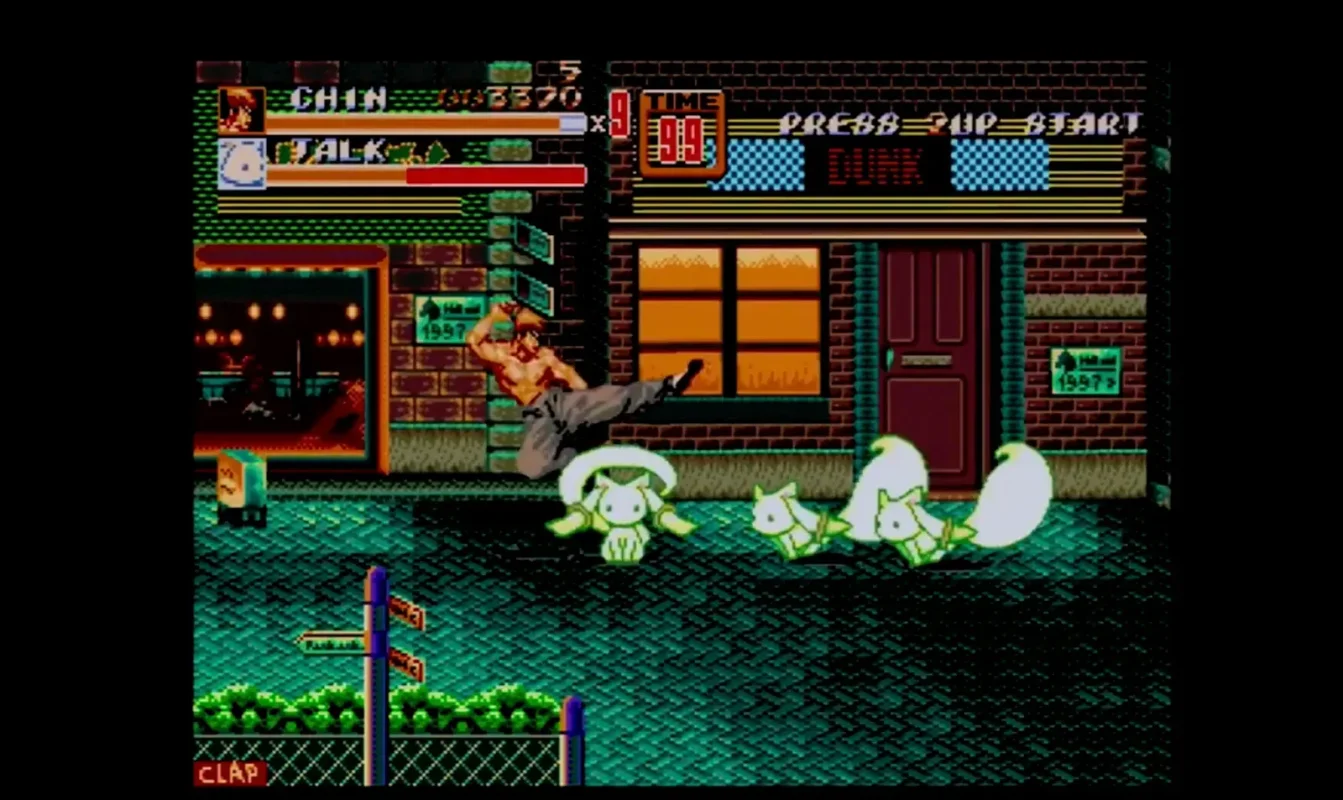
A new and decidedly bizarre romhack has surfaced, transforming SEGA‘s classic 1992 beat ’em up, Streets of Rage 2, into a shoot ’em up parody of the infamous 1995 Super Famicom title, Hong Kong 97. The patch, released by creator PPI_Akiko, is now available for download from ROM Hack Plaza.

📜 The Infamous Source MaterialThe original Hong Kong 97 (1995) for Super Famicom is legendary for its poor quality. It was an unlicensed game developed by a Japanese programmer, featuring crude digitized photos of Hong Kong, repetitive music, and a bizarre plot about fighting communists. It’s considered a prime example of a ‘kusoge’ (crap game) and has gained cult status for its sheer awkwardness.

Dubbed Streets of Rage 2 Hong Kong 97, this is not a simple graphical tweak. The hack fundamentally alters the gameplay of the Mega Drive classic, turning Axel, Blaze, and company’s brawling into a bullet-fest. By pressing Y or B+C, characters can now fire projectiles, with an option for rapid machine-gun-like fire. It also introduces an experience system based on score, aerial combos, and a dash move, grafting mechanics from other genres onto the familiar streets of Wood Oak City.

The connection to Hong Kong 97 is primarily aesthetic, channelling the notorious ‘kusoge’ or ‘crap game’ known for its garish visuals, repetitive music, and surreal premise. The hack replaces all the music-though a sub-patch can restore Yuzo Koshiro’s legendary soundtrack-and swaps character sprites to mirror the SNES oddity. It stands as a modern, meta tribute to a very specific and awkward corner of 16-bit history, where the polished brawler meets one of gaming’s most infamous cult titles.

For the retro community, hacks like this demonstrate the enduring flexibility of Genesis cartridges and the creativity of modern modders. While official re-releases keep classics alive, projects such as this re-imagine them entirely, offering veterans a completely new way to experience a game they know inside out. The hack’s detailed control scheme and multiple patches show a level of polish often reserved for commercial products, proving that the scene surrounding 30-year-old hardware remains as active and inventive as ever.

Want more retro gaming news delivered to your inbox? Subscribe to our newsletter for weekly updates on classic gaming, preservation projects, and collector insights.

Rare Hanshin Tigers GameCube Edition Surfaces Online

From the RetroShell news archive. Originally published 2025-12-23 on our former news site and restored here.

A rare and unusual piece of Nintendo hardware has surfaced online, showcasing a GameCube variant that few collectors have ever seen. According to a post on r/GameCube, a limited edition console was produced in collaboration with the Hanshin Tigers, a professional baseball team in Japan’s Nippon Professional Baseball league. The unit features the team’s iconic yellow and black colour scheme, with the Tigers’ logo prominently displayed on the top of the console.

📜 Nintendo’s History of Regional PromotionsNintendo has a long tradition of creating region-specific promotional hardware. Before the Hanshin Tigers GameCube, Nintendo produced Japan-exclusive Famicom variants for companies like Sharp and Family Mart, and special Game Boy Color units for events like the 2000 Sydney Olympics. These items were typically produced in very limited quantities and rarely sold at retail.

This discovery highlights the fascinating world of Japan-exclusive promotional hardware, a category that includes other oddities like the Resident Evil 4 chainsaw controller or the myriad of colourful Famicom variants. The GameCube, released in 2001 in Japan and 2002 elsewhere, was already available in a spectrum of colours, from platinum and orange to the deep purple of the limited edition Tales of Symphonia bundle. However, a sports team collaboration for the console is a particularly niche find, likely produced in extremely limited numbers for contests or special events, much like the Pokémon Centre Game Boy Advances.

Finds like this underscore the depth of gaming history that remains undocumented. While most of us were playing Super Mario Sunshine or The Legend of Zelda: The Wind Waker on our standard cubes, unique units like this were sitting in Japanese homes or storage lockers. It serves as a reminder that for every mass-produced indigo console, there are handfuls of these regional curiosities that rarely make it to the international collector’s market.

📊 The Rarity of Special Edition GameCubes20+: Official GameCube color variants released worldwide, including standard and limited editions.- 4: Known Japan-exclusive promotional GameCube variants (including this Hanshin Tigers unit, the Tales of Symphonia bundle, and others).- ~12.5 million: Total GameCube consoles sold in Japan, making special editions like this statistically very rare.- 2001: Year the GameCube launched in Japan, establishing the timeframe for these promotional items.

The emergence of the Hanshin Tigers GameCube is a boon for preservationists and a tantalising clue for completists. It prompts questions about what other corporate or promotional tie-ins for the system might still be waiting to be rediscovered, adding another layer to the legacy of Nintendo’s distinctive, lunchbox-shaped console.

Want more retro gaming news delivered to your inbox? Subscribe to our newsletter for weekly updates on classic gaming, preservation projects, and collector insights.

Final Build of Cancelled Resident Evil Game Boy Color Port

From the RetroShell news archive. Originally published 2025-12-22 on our former news site and restored here.

A previously lost version of the cancelled Resident Evil port for the Game Boy Color has been recovered and shared online, potentially offering the first chance to complete the ambitious project. According to the preservation site Games That Weren’t, this newly surfaced “final build” includes the climactic Tyrant boss and a reportedly triggerable ending sequence, features missing from earlier incomplete builds discovered in 2011.

📜 The Game Boy Color’s Ambitious PortsThe late 1990s saw several studios attempting to port major PlayStation titles to the 8-bit Game Boy Color, often with surprising results. While Resident Evil was cancelled, other ambitious ports like Tomb Raider and Driver were actually released, showcasing the system’s technical limits and the creativity required to adapt 3D games into 2D.

The port was a technical marvel for its time, developed in the late 1990s by London-based studios HotGen and Fluid Studios. It attempted to recreate the 3D environments of the 1996 PlayStation classic using sophisticated 2D sprite work on the 8-bit handheld. Former producer Jon Oldham revealed the project was scrapped despite being functionally ready, stating that Resident Evil creator Shinji Mikami “had said it couldn’t be done and refused to allow it to be finished.”

This discovery sheds new light on a fascinating “what if” for the Game Boy Color library. While the system eventually received the top-down Resident Evil Gaiden in 2000, this earlier port aimed to deliver a far more authentic adaptation of the Spencer Mansion adventure. Programmer Nigel Speight, whose comments are archived by Games That Weren’t, estimated the game was 75-85% complete, with its scope expanding as publisher Virgin Interactive repeatedly authorised larger cartridge sizes to include more original content.

For fans, the recovery of such a significant cancelled title is a major event. It offers a tangible look at the bold, often technically constrained experiments of the late-90s portable scene, where developers like HotGen pushed hardware far beyond its perceived limits. The community will now be eager to see if this final build indeed allows players to experience a chapter of Resident Evil history that, for over two decades, was thought to be permanently locked away.

Want more retro gaming news delivered to your inbox? Subscribe to our newsletter for weekly updates on classic gaming, preservation projects, and collector insights.

Trails in the Sky SC Remaster Arrives Fall 2026

From the RetroShell news archive. Originally published 2025-12-22 on our former news site and restored here.

Nihon Falcom has confirmed a release window for the long-awaited English localisation of The Legend of Heroes: Trails in the Sky the 2nd Chapter Evolution, with the title slated to arrive in Autumn 2026 for PlayStation 5, Nintendo Switch, and PC via Steam. According to the report from Siliconera, the publisher has also opened a pre-registration page for the title, signalling the final stretch for a project fans have anticipated for nearly a decade.

📜 The PSP’s JRPG LegacyThe original Trails in the Sky trilogy debuted on Sony’s PlayStation Portable (PSP) in Japan between 2004 and 2007. The handheld was renowned for its deep library of Japanese RPGs, including Final Fantasy Tactics: The War of the Lions, Persona 3 Portable, and Crisis Core: Final Fantasy VII. This revival continues the preservation of games from that influential era.

For enthusiasts of classic Japanese role-playing games, this announcement closes a significant chapter in a modern preservation saga. The Evolution versions of the Trails in the Sky trilogy, which feature updated graphics, full voice acting, and quality-of-life improvements, first launched on the PlayStation Vita in Japan between 2015 and 2016. While the first chapter saw a Western release, the sequels remained exclusive to Japan, leaving a notable gap for collectors and players dedicated to the sprawling Trails series. The Vita, Sony’s beloved handheld that ceased production in 2019, has become a cult favourite, making these enhanced ports some of its most sought-after untranslated titles.

The decision to bring The 2nd Chapter Evolution to contemporary platforms, including the yet-to-be-released Switch 2, is a notable move. It mirrors the industry’s broader trend of revitalising and re-releasing definitive editions of classic RPGs, much like Square Enix’s various iterations of Final Fantasy titles from the PlayStation and PlayStation 2 eras. For a series that began in 2004 on the PC and found its footing on the PlayStation Portable, this ensures its foundational story remains accessible without requiring older hardware or fan-made translation patches.

This localisation finally completes the availability of Falcom’s seminal Sky arc in its most modern form for English-speaking audiences. It underscores a persistent demand for deep, narrative-driven RPGs from the mid-2000s, a period that also gave us titles like Persona 4 and Dragon Quest VIII. The two-year wait until Autumn 2026 may test the patience of devotees, but it solidifies the notion that for certain legacy franchises, the journey-and the audience-is very much still alive.

Want more retro gaming news delivered to your inbox? Subscribe to our newsletter for weekly updates on classic gaming, preservation projects, and collector insights.

Pokémon FireRed Open World ROM Hack: Aesthetic Red Revealed

Pokémon FireRed Open World ROM Hack: Aesthetic Red Revealed

From the RetroShell news archive. Originally published 2025-12-20 on our former news site and restored here.

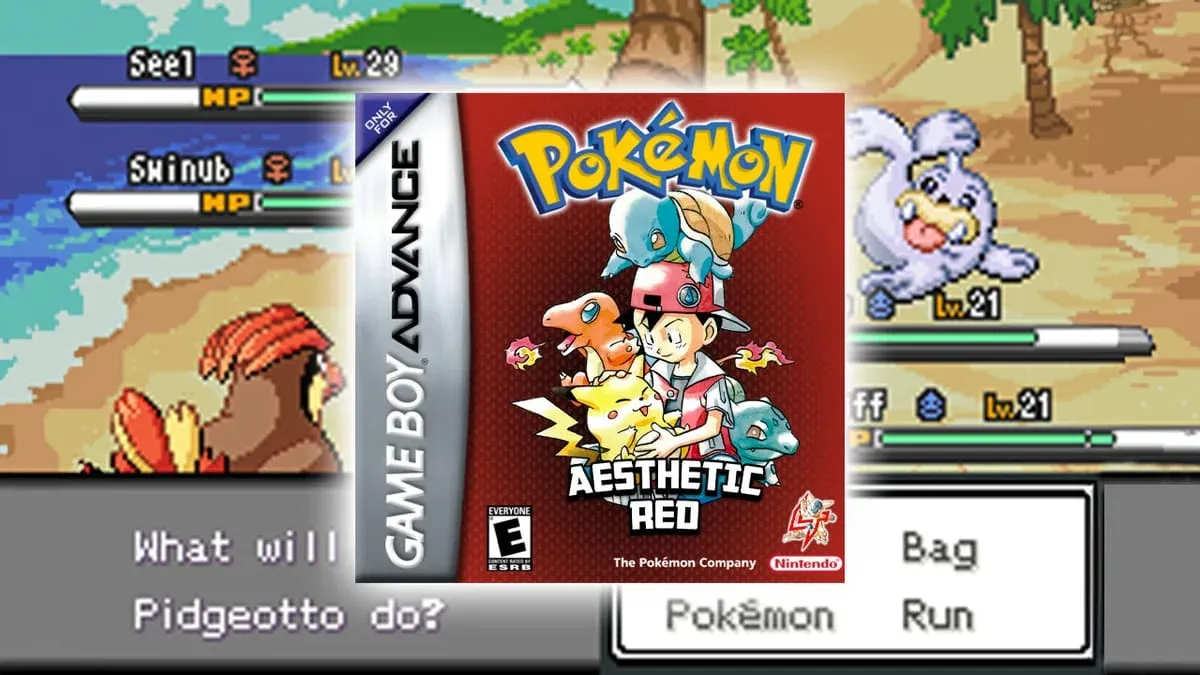
A new ROM hack for Pokémon FireRed has launched, promising to completely transform the 2004 Game Boy Advance title with an open-world structure and a comprehensive visual and audio overhaul. The project, titled Pokémon Aesthetic Red, was announced via a post on Pokécommunity and shared by the account Pokémon Fangame News.

📜 The ROM Hack RevolutionThe practice of modifying Pokémon games via ROM hacking began in earnest with the Game Boy Advance era. Tools like AdvanceMap and XSE (eXtreme Script Editor) empowered fans to create new regions, stories, and mechanics, leading to a vibrant community that continues to innovate on classic titles like FireRed decades after their release.

Created by developer LibertyTwins, the hack reimagines the journey through Kanto by removing the linear progression of the original. Players can now challenge the game’s eight gyms in any order they choose, with no restrictions on obtaining Hidden Machines (HMs) required to navigate the world. This structural shift is complemented by a suite of modern quality-of-life features, including reusable TMs, infinite Rare Candies, and the ability to Wonder Trade. The core gameplay has also been rebalanced with increased difficulty for major battles and the inclusion of all Pokémon from the first two generations.

The most immediately striking change, however, is its presentation. Aesthetic Red delivers what its name promises: a complete graphical refresh with vibrant new colour palettes and sprite work, alongside a brand-new soundtrack. Players can choose between three distinct versions: a ‘Normal’ version with all new features; a ‘Faithful’ version that retains original stats and types; and a ‘Music & Graphics Only’ mode. The Normal and Faithful editions even allow players to toggle between Game Boy Color-style and Nintendo DS-style sprites and fonts.

This project continues a long tradition within the Pokémon community of extending the life of classic titles through modification. While official releases have moved towards 3D models and open areas as seen in Pokémon Legends: Arceus, dedicated fans have spent decades reworking the foundational 2D games. Hacks like Aesthetic Red demonstrate how the original Game Boy Advance framework remains a remarkably flexible canvas for experimentation, offering veteran trainers a fresh way to revisit the familiar routes of Kanto two decades on.

Want more retro gaming news delivered to your inbox? Subscribe to our newsletter for weekly updates on classic gaming, preservation projects, and collector insights.

Anduril Edition Chromatic Handheld Announced

From the RetroShell news archive. Originally published 2025-12-19 on our former news site and restored here.

It was, perhaps, inevitable. When you have one foot in the world of autonomous attack drones and the other in the cosy, pixelated past of the Game Boy, the wires are bound to cross eventually. Palmer Luckey, the wunderkind behind Oculus VR and now the founder of defense technology firm Anduril Industries, has released a limited edition of his ModRetro Chromatic handheld. And yes, it is branded by his weapons company.

The Anduril Chromatic + Porta Pro Bundle is exactly what it says on the tin: a high-end FPGA clone of the Game Boy Color, dressed up in the livery of the military-industrial complex.

Retailing at a hefty $349.99, this is not a toy for the faint of wallet. The standard Chromatic’s magnesium alloy shell has been treated with a “hardcoat anodized” finish (the page also mentions Cerakote, a finish usually found on firearms to prevent corrosion in the field). The screws are coated in Titanium Nitride, and the screen is protected by sapphire crystal, presumably so you can play Tetris in the middle of a shrapnel storm without scratching the display.

The aesthetic is undeniably severe. It trades the cheery “Funtastic” translucency of the 90s for a matte, tactical black that screams “special ops.” It also features custom laser etching on every interaction point, because nothing says “tactile feedback” like a grip texture designed for an assault rifle.

Bundled with the console is a pair of Koss Porta Pro headphones, similarly given the tactical treatment. The Porta Pro is an audio icon in its own right—a lightweight, open-back design that has remained virtually unchanged since 1984. Here, it has been stripped of its usual retro charm and dipped in the same stealthy palette, complete with a custom microphone for those who need to coordinate multiplayer sessions with military precision.

It is a bizarre, fascinating product. On one hand, the specs are undeniably impressive: pixel-perfect 160×144 resolution, FPGA accuracy, and a build quality that could likely survive a drop from a drone. On the other hand, there is something delightfully absurd about playing Pokémon Crystal on a device branded by a company that builds autonomous air vehicles.

For those who find the standard Chromatic a bit too whimsical, or who simply need their retro gaming hardware to match their tactical vest, pre-orders are open now. Just be prepared to wait until Summer 2026 for shipping.

You can view the full specs and secure a unit at the link below.

View the Anduril Bundle at ModRetro

For more bizarre hardware collaborations and the rest of the week’s retro news in a single roundup, subscribe at https://retrogamingnews.substack.com/

Contra Force SNES Port Beta Released by Infidelity | 55

From the RetroShell news archive. Originally published 2025-12-16 on our former news site and restored here.

A new, fully playable Super Nintendo port of the maligned 1992 NES title Contra Force has been released by veteran porter Infidelity. The developer announced the beta version’s availability via Twitter, stating the project is playable from start to finish, with only the conversion of the original DPCM music samples to the SNES’s BRR format remaining.

📜 A Game With An Identity CrisisContra Force was never intended to be a Contra game. It was originally developed as a separate title called Arc Hound for the Japanese Famicom. After its cancellation in Japan, Konami rebranded it for a North American NES release in 1992, slapping the Contra name on it to leverage the series’ popularity, despite its vastly different theme and gameplay.

Infidelity has built a formidable reputation for expertly translating 8-bit Konami classics to the 16-bit hardware, having previously brought titles like Life Force and Gradius to the Super Nintendo with impressive accuracy. This latest project tackles one of the franchise’s most curious entries. Originally developed under the name Arc Hound and cancelled in Japan, the game was rebranded as a Contra title for its North American release. It swapped the series’ iconic alien-blasting for urban counter-terrorism, a departure that, combined with its slower, more strategic gameplay, led to a lukewarm reception from fans accustomed to the run-and-gun chaos of Contra and Super C.

The port’s existence highlights the enduring fascination with gaming’s oddities. While Contra III: The Alien Wars on the SNES is rightly celebrated as a pinnacle of the series, this project offers a chance to re-evaluate a title that has lived in the shadow of its predecessors. For collectors and enthusiasts, it represents a fascinating ‘what if’ scenario, presenting the 1992 game as it might have appeared had it been designed for the 16-bit console from the outset.

The beta can be downloaded now, allowing players to experience this unconventional chapter of Contra history with the visual and audio polish of the Super Nintendo. It serves as a testament to the dedicated preservation and creative reimagining happening within the retro community, giving a second life to titles that once defined the edges of a beloved franchise.

Want more retro gaming news delivered to your inbox? Subscribe to our newsletter for weekly updates on classic gaming, preservation projects, and collector insights.