Category Archives: Gaming History

A post about retro gaming history

The Evolution of Dragon Ball Games: From Pixels to Power Levels

A Legendary Franchise with a Gaming Legacy

For over 40 years, Dragon Ball has been a global phenomenon, captivating fans through its manga, anime, and an ever-expanding library of video games. With more than 160 officially licensed titles under its belt, the Dragon Ball franchise has explored nearly every genre and gaming platform imaginable, from 8-bit side-scrollers to modern 3D fighters. But which games truly stand out, and how has the franchise evolved over time?

The First Steps: Early Dragon Ball Games

1. Dragon Ball: Dragon Daihikyo (1986)

The very first Dragon Ball video game debuted on the short-lived Super Cassette Vision console. A simple shoot-’em-up featuring Goku on his Flying Nimbus, this title introduced players to the interactive side of the Dragon Ball universe.

2. Dragon Ball: Shenron no Nazo (1986)

Released for the Famicom, this action-adventure game introduced survival mechanics by requiring Goku to constantly replenish his health with food. The U.S. localization—titled Dragon Power—censored many elements, replacing flying panties with sandwiches and Master Roshi with a generic wizard.

Expanding Genres: RPGs and Card Battlers

3. Dragon Ball: Daimaō Fukkatsu (1988)

A revolutionary RPG for its time, this Famicom title used a card-based system for combat and exploration. Predating collectible card games like Magic: The Gathering by several years, it showcased the series’ ability to innovate.

4. Dragon Ball Z: Legendary Super Warriors (2002)

One of the best card-based DBZ games, this Game Boy Color gem offered strategic, turn-based battles and a surprisingly deep narrative spanning Dragon Ball Z’s key arcs.

The Fighting Game Boom

5. Dragon Ball Z: Super Butōden (1993)

The first proper 2D fighting game in the franchise, this Super Famicom classic introduced split-screen mechanics for larger battlefields. Its success led to two sequels and laid the groundwork for many DBZ fighters to come.

6. Dragon Ball Z: Budokai (2002)

A turning point for the series, Budokai brought faithful 3D character models and accessible combat to the PlayStation 2. While not perfect, it established the foundation for future 3D fighters.

7. Dragon Ball Z: Budokai Tenkaichi 3 (2007)

With a staggering roster of over 150 characters, destructible environments, and expansive 3D arenas, Tenkaichi 3 remains a fan favorite. Its sheer scale and authenticity have yet to be fully surpassed.

Modern Masterpieces

8. Dragon Ball FighterZ (2018)

Developed by Arc System Works, this visually stunning 2D fighter combines the fast-paced combat of Guilty Gear with the cinematic flair of Dragon Ball Z. Balancing accessibility and depth, it has earned a place in the competitive fighting game scene and at tournaments like Evo.

9. Dragon Ball Z: Kakarot (2020)

A sprawling action RPG that faithfully retells DBZ’s story, Kakarot offers fans an immersive experience filled with side quests, world exploration, and iconic battles. Though imperfect, it’s a love letter to the series.

The Best, Worst, and Weirdest

• Best: Dragon Ball FighterZ – A technical masterpiece and a fan-favorite fighter.

• Worst: Dragon Ball Z: Taiketsu – A poorly executed GBA game with clunky mechanics and rushed development.

• Weirdest: Dragon Ball: Atsumare! Goku’s World – A trivia game played with a landline phone, featuring Goku calling players directly.

Looking to the Future: Sparking Zero

The newly released Dragon Ball Sparking Zero updates the beloved Tenkaichi formula with modern visuals, online multiplayer, and an astounding roster of 182 characters. Its record-breaking launch proves that the Dragon Ball gaming legacy is far from over.

Why Dragon Ball Games Endure

From the first pixelated Goku to modern masterpieces, Dragon Ball games have always found ways to capture the spirit of the series. Whether it’s through innovative mechanics, faithful storytelling, or massive character rosters, these games keep fans engaged and eager for more.

What’s your favorite Dragon Ball game, and what do you hope to see next? Let us know!

Source: The Evolution of Dragon Ball Games by IGN.

The Hidden Secrets of the Nintendo 64’s Memory: Exploring Its True Potential

Unveiling the Mystery of the N64’s “Hidden Bits”

The Nintendo 64, marketed with 4 MB of RAM and expandable to 8 MB via the Expansion Pack, might not be what it seems. Recent findings reveal that the N64 actually possesses an additional 0.5 MB of “hidden” memory, bringing its true capacity to 4.5 MB (and 9 MB with the Expansion Pack). These hidden bits, buried deep within its architecture, have sparked intrigue among retro gaming enthusiasts and hardware developers.

What Are These Hidden Bits?

The N64’s memory operates on a unique system where each memory cell holds 9 bits of data instead of the standard 8. While most games only utilize 8 bits per cell, the ninth bit is reserved for specific rendering processes. This extra data has largely remained untapped, with only a handful of games—such as The Legend of Zelda: Majora’s Mask—making purposeful use of it.

Why Were These Hidden Bits Added?

The additional bits were designed for the N64’s advanced anti-aliasing capabilities. By calculating how much of a screen pixel is covered by a rendered triangle, the system can blend colors for smoother visuals. These calculations require three “hidden” bits per pixel:

• Two for coverage percentage.

• One visible bit for blending.

This innovative approach allowed the N64 to achieve its signature smooth graphics, but it also left developers with a hidden resource that could theoretically be harnessed for other purposes.

Can Developers Use These Hidden Bits?

Yes—but with limitations. Here’s how the hidden bits can be accessed:

1. GPU-Based Techniques

The GPU can read and write these bits for rendering effects, as demonstrated by Majora’s Mask in its Lens of Truth effect.

2. CPU-Based Methods

Through a technique involving “invisible geometry,” developers can write specific data to the hidden bits. However, this method is slow and complicated, limiting its practicality.

3. EBUS Mode

A more efficient approach leverages the N64’s EBUS mode, allowing developers to read and write these bits more effectively. While this method sacrifices some visible memory, it offers a way to access extra storage in specific scenarios.

Practical Applications and Challenges

While the extra memory can theoretically provide a 5-10% boost in usable RAM, its real-world application is niche:

• Ideal for rarely accessed data like dialogue, save files, or static assets.

• Requires careful memory management to avoid corrupting visible data.

• Not supported by most emulators, making it inaccessible to many players.

A Glimpse into Development

For developers like the video’s creator, these techniques present exciting opportunities. Working on an N64 game that pushes the console’s limits, they’ve explored every quirk of the hardware, including the hidden bits. While these tricks offer unique advantages, they also underline the ingenuity required to develop on retro platforms.

Conclusion: Unlocking the Potential of Hidden Memory

The discovery of the N64’s hidden memory highlights the depth and complexity of retro gaming hardware. While its practical use remains limited, it showcases the creative potential of developers who continue to push the boundaries of what classic consoles can do.

Whether you’re a developer or a retro gaming enthusiast, the N64’s hidden bits offer a fascinating glimpse into the innovative spirit of gaming’s golden era.

Source: The Hidden Secrets of the Nintendo 64 by @KazeN64.

Unearthing Gaming History: Nine Discoveries from the Development of Army Men: Sarge’s Heroes

The Treasure Trove of Video Game History

The preservation of video game history often focuses on early builds and prototypes, but an equally valuable source lies in the documentation surrounding a game’s development. Recently, the Video Game History Foundation was gifted a remarkable collection of documents and files from Michael Manheim, a game developer whose career spans decades with companies like Sunsoft, EA, and 3DO. Among the gems of this collection are detailed records of Army Men: Sarge’s Heroes, revealing fascinating insights into its development.

Nine Fascinating Facts About Sarge’s Heroes

1. A Lightning-Fast Development Cycle

From pitch to store shelves, the development of Sarge’s Heroes took only 18 months—a remarkable feat considering it was one of five Army Men titles released in 1999.

2. Inspired by Tomb Raider and GoldenEye

Drawing inspiration from console hits like Tomb Raider and GoldenEye, the game shifted the series’ focus from strategy to a character-driven adventure, tailored for home consoles.

3. Simplified Gameplay for Development Feasibility

Initial ambitious plans included squad mechanics, vehicle controls, and co-op campaigns. Many features were cut to meet deadlines, though echoes of these ideas appeared in later titles.

4. The Creation of Vikki

The design of Vikki, the series’ lone female character, faced unique challenges. Early concepts struggled to balance her role as a character and as an appeal to the target audience.

5. Built with the N64 in Mind

The original pitch firmly positioned Sarge’s Heroes as an N64-focused title, leveraging the console’s strengths in rendering expansive 3D environments and supporting four-player split-screen gameplay.

6. A Name from Trip Hawkins

The name Sarge’s Heroes was suggested by EA and 3DO founder Trip Hawkins, aiming to give the game a unique identity while hinting at its narrative focus.

7. Robin Williams as Sarge?

Robin Williams, an avid gamer, was once considered for the role of Sarge. Ultimately, the character was voiced by the prolific Jim Cummings.

8. Aiming for a Multimedia Brand

Plans for Sarge’s Heroes extended beyond games to include action figures, a television series, and even a feature film. While some of these plans were unrealized, the IP became a cornerstone of the Army Men franchise.

9. Nintendo’s Behind-the-Scenes Input

Rare glimpses into Nintendo’s internal testing feedback highlight the depth of their involvement. Suggestions for graphical tweaks and design refinements helped shape the final product.

Why This Matters to Retro Gaming Enthusiasts

The insights from Manheim’s documents illustrate the creative and technical challenges of game development in the late 1990s. From ambitious pitches to hard decisions on cuts, these stories enrich our understanding of gaming history. Collectors and fans of retro gaming can also find joy in preserving these relics, much like the cartridges and consoles themselves.

Protect and Showcase Your Gaming Memories

For collectors of retro games like Army Men: Sarge’s Heroes, keeping your treasures in pristine condition is key. RetroShell’s protective cases provide durable, high-quality storage to safeguard your collection while showcasing your love for classic gaming.

Support the Video Game History Foundation

To continue exploring and preserving video game history, consider supporting the Video Game History Foundation through their YouTube channel or Patreon. Every contribution helps keep the stories of our gaming past alive.

Source: Nine New Discoveries About Army Men: Sarge’s Heroes by The Video Game History foundation.

Retro Mod Works Introduces ‘PS Placeable’ – A PSP Transformed into a Console

Retro Mod Works has unveiled the ‘PS Placeable,’ a modification that converts a PlayStation Portable (PSP) into a console-style device resembling a miniature PlayStation 2. This mod allows users to play PSP games on a TV using Bluetooth controllers, all while retaining access to the original UMD drive. The PS Placeable is compatible with PSP-2000 and PSP-3000 models, utilizing the native video output capabilities of these versions. Retro Mod Works offers pre-built units for $274.99, though due to high demand, these are currently waitlisted. Alternatively, they provide a service to modify customer-supplied PSPs for $174.99, and DIY kits are available for those interested in assembling the mod themselves. This innovative project breathes new life into PSP consoles, especially those with broken screens, by repurposing them into functional home consoles.

For more information, visit: PS Placeable – Retro Mod Works

The Forgotten Legacy of the Sega Game Gear: A Look Back at the Portable Console That Could Have Been a Contender

The Sega Game Gear was a portable gaming device that was released in 1990 as a direct competitor to Nintendo’s Game Boy. Although it wasn’t as successful as the Game Boy, it still had a loyal following and some notable games that are still remembered today. One of the standout features of the Game Gear was its colour screen.

Ga

Unlike the Game Boy, which had a monochromatic display, the Game Gear’s screen could display up to 32 colours at once. This made games like Sonic the Hedgehog and Mortal Kombat much more visually impressive on the Game Gear than they were on the Game Boy.


However, the Game Gear did have some drawbacks. One of the biggest issues was its battery life. The Game Gear required six AA batteries to run, and they only lasted for a few hours at most. This made the Game Gear much less portable than the Game Boy, which had a much longer battery life. Another issue with the Game Gear was its size. While it was technically portable, it was much larger and heavier than the Game Boy. This made it less convenient to carry around, and it was also more prone to damage if dropped or bumped. To address this issue, Game Case protectors were introduced. These protectors were essentially cases that the Game Gear could be placed in when not in use. They were designed to protect the device from scratches, bumps, and other forms of damage while also making it easier to carry around. Game Case protectors came in a variety of styles and designs. Some were made of hard plastic and resembled small suitcases, while others were made of soft materials like neoprene and could be carried over the shoulder like a purse.


Overall, the Sega Game Gear was an impressive piece of gaming hardware that was ahead of its time in terms of graphics and screen quality. However, its short battery life and bulky design made it less popular than the Game Boy. For those who still enjoy playing Game Gear games today, Game Case protectors are a must-have accessory to ensure the device remains in good condition.


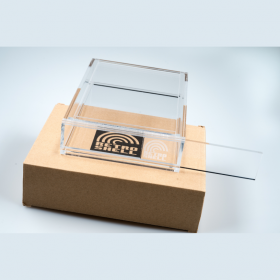
If you are an experienced Game Gear collector, or starting to build your first collection – we suggest that you protect your games with our Sega Game Gear game box protectors. At RetroShell we offer Game Gear game case protectors made of 4mm clear acrylic with a sliding door for easy access. Our Game Gear game box protectors are best in class, and allow you to stack your Game Gear game cases either horizontally or vertically to display your collection.

The Power of Preservation: How Sega Megadrive Box Protectors Keep Retro Gaming Alive

The Sega Megadrive, also known as the Genesis in North America, was a popular home video game console that was first released in Japan in 1988. It was developed and produced by Sega and quickly became one of the most successful gaming systems of its time. The console was known for its advanced technology, innovative features, and a library of classic games that are still beloved by gamers today.

Sega Megadrive Box Protectors

One of the defining features of the Sega Megadrive was its 16-bit processor, which allowed for more advanced graphics and faster gameplay than its competitors. It also introduced a variety of peripherals and accessories, such as the Sega CD and the Sega 32X, which expanded the console’s capabilities and provided gamers with new experiences.

Despite its popularity, the Sega Megadrive faced stiff competition from other gaming systems such as the Super Nintendo Entertainment System (SNES) and the Atari Jaguar. However, its dedicated fanbase continued to grow, and the console remained a staple in many homes throughout the 1990s.

Today, many retro gamers still collect and play Sega Megadrive games, with titles such as Sonic the Hedgehog, Phantasy Star IV, and Streets of Rage 2 among the most highly regarded. The console’s iconic design and distinctive logo also continue to inspire nostalgia and hold a special place in the hearts of many gamers.

If you’re a collector or just a fan of the Sega Megadrive, you may be interested in protecting your game boxes with Sega Megadrive Box Protectors. These plastic protectors are specifically designed to fit Megadrive game boxes and provide an extra layer of protection against scratches, wear, and tear. They can also help preserve the value of your games, especially if you plan to sell or trade them in the future.

In addition to Megadrive Box Protectors, there are also a variety of other accessories and add-ons available for the console, such as extension cords, controllers, and memory cards. With the continued popularity of retro gaming, it’s never been a better time to be a fan of the Sega Megadrive.

In conclusion, the Sega Megadrive is a console with a rich history and a legacy that continues to live on today. Its advanced technology, innovative features, and library of classic games have made it a beloved system among gamers. If you’re a fan or collector, consider investing in Sega Megadrive Box Protectors to protect and preserve your game boxes for years to come.


Nintendo Famicom – The Console that started it all

The Nintendo Famicom, also known as the Family Computer, was a home video game console released by Nintendo in Japan in 1983. One of the defining features of the Famicom was its unique game boxes, which featured colorful and eye-catching designs that helped to make the console stand out on store shelves. In this blog post, we’ll take a closer look at the design and history of Famicom game boxes.

A Famicom Store Re-Imagined

The Famicom game boxes were designed to be both attractive and informative. The front of the box featured a large image of the game’s main character or characters, along with the game’s title and a small logo for the publisher. The back of the box featured screenshots of the game, a brief description of the game’s story and gameplay, and a list of features and controls. The sides of the box featured additional information about the game, such as the developer, release date, and number of players.

The Famicom game boxes were a different size to the NES game boxes, being smaller and not having the same NES video game protector sleeve which was standard for the system. The Famicom game boxes were made of cardboard and due to this they can wear fast due to their age and through wear and tear. For this reason it is a good idea if you are a collector to get the best Famicoms video game protectors for your Famicom game boxes. At RetroShell we offer the best famicom protectors which are made from 4mm acrylic and have a sliding door for easy access and offer the best retro game protection.

The design of Famicom game boxes was heavily influenced by the video games and anime of the time, with many boxes featuring bright colors, bold lines, and exaggerated character designs. The boxes also often featured illustrations of the game’s characters and environments, which helped to give players a sense of what the game was like before they even played it.

The design of Famicom game boxes was not only used as a way to grab attention but also as a way to create a sense of nostalgia. Many of the games box designs were often used again in later games or in re-released versions, creating a sense of continuity and a feeling of familiarity to old fans and new players.

The Famicom game boxes were not only a defining feature of the console, but they also played a major role in the success of the Famicom in Japan. The colorful and eye-catching designs of the boxes helped to make the Famicom stand out on store shelves, and they helped to attract both children and adults to the console. Today, Famicom game boxes are highly sought after by collectors and are considered an important piece of gaming history.

In conclusion, Famicom game boxes were not only an important part of the console’s design but also played a major role in the success of the Famicom in Japan. The unique design and attention to detail of the game boxes helped to make the Famicom stand out on store shelves and helped to attract both children and adults to the console. Today, Famicom game boxes are highly sought after by collectors and are considered an important piece of gaming history. If you want to keep and display your famicom game boxes in the best way, get yourself some RetroShell Famicom game protectors to ensure that they remain preserved for future generations.


The Top 20 SNES Games with Metacritic Scores and Present Values

The SNES, or Nintendo Super Nintendo Entertainment System is a beloved console from what I consider to be the golden generation of gaming. The limited 8-bit era was over and the stage was set for more colours and better graphics. The two winners of the era were the Sega Megadrive/Genesis, and the Super Famicom, or Super Nintendo.

Which are on the list 

I was given a Megadrive for my birthday, which made me firmly team Sega – but as I have gotten older, I have learned to appreciate the amazing SNES. So without further ado, I give you my top 20 SNES games ever (my opinion!).

#20 – Mortal Kombat II is a classic fighting game that defined the genre in the 90s. With a roster of iconic characters and brutal finishing moves, it’s a must-play for fans of fighting games. Metacritic score 76%, expect to pay:  $15-$90

#19 – Teenage Mutant Ninja Turtles- Turtles in Time is a classic beat-’em-up with fast-paced action and memorable levels. With up to four player co-op, it’s a great game to play with friends. Metacritic score 87%, expect to pay:  $45-$500

#18 – Kirby’s Dream Course is a unique and charming take on mini-golf, featuring the iconic pink character. With fun power-ups and challenging levels, it’s a must-play for fans of Kirby games. Metacritic score 79%, expect to pay:  $30-$110

#17 – Star Fox (Star Wing) is a classic on-rails shooter with a memorable cast of characters and iconic levels. With smooth gameplay and a sense of speed, it’s a must-play for fans of the genre. Metacritic score 82%, expect to pay:  $15-$50

StarWing SNES Game Box Protector

#16 – F-Zero is a high-speed racing game with futuristic vehicles and challenging courses. With tight controls and a sense of speed, it’s a must-play for fans of the racing genre. Metacritic score 80%, expect to pay:  $15-$55

#15 – Super Mario RPG- Legend of the Seven Stars is a classic RPG that combines the best elements of the Mario franchise with traditional RPG mechanics. With a memorable storyline and engaging combat, it’s a must-play for fans of both genres. Metacritic score 88%, expect to pay:  $90-$500

#14 – Shadowrun is a classic RPG based on the popular tabletop game. With a deep story and complex character progression, it’s a must-play for fans of the genre and of the franchise. Metacritic score 84%, expect to pay:  $60-$150

#13 – ActRaiser is a unique blend of city-building simulation and action platformer. With an epic storyline and memorable music, it’s a must-play for fans of both genres. Metacritic score 79%, expect to pay:  $50-$230

#12 – Contra III- The Alien Wars is a fast-paced and challenging run-and-gun shooter. With cooperative multiplayer and memorable levels, it’s a classic that’s still fun to play today.Metacritic score 81%, expect to pay:  $30-$225

#11 – Super Ghouls ‘n Ghosts is a challenging action platformer that’s known for its difficulty. With tight controls and beautifully designed levels, it’s a classic game that still holds up today. Metacritic score 78%, expect to pay:  $20-$210

#10 – Mega Man X2 is a classic action platformer that builds upon the success of its predecessor. With fast-paced action and challenging levels, it’s a must-play for fans of the Mega Man franchise. Metacritic score 83%, expect to pay:  $150-$500

#9 – Super Mario All-Stars is a collection of four classic Mario games, updated with improved graphics and sound. It’s a must-have for fans of the franchise and a great way to experience some classic Mario games on the SNES. Metacritic score 87%, expect to pay:  $25-$80

#8 – Donkey Kong Country is a landmark platformer with fluid animations and tight controls. Its levels are challenging and well-designed, and its use of pre-rendered graphics was revolutionary at the time. Metacritic score 85%, expect to pay:  $10-120

#7 – Super Castlevania IV is a beautifully designed platformer with tight controls and challenging levels. It’s a must-play for fans of the genre, and its stunning visuals still hold up today. Metacritic score 77%, expect to pay:  $25-$150

#6 – Secret of Mana is a classic action RPG that features a memorable storyline and engaging combat. With up to three player co-op, it’s a great game to play with friends or family. Metacritic score 87%, expect to pay:  $25-$150

#5 – Super Mario World 2- Yoshi’s Island is a charming platformer that puts players in control of Yoshi. The game’s graphics and sound design are distinctive and memorable, and it remains a fan-favorite to this day. Metacritic score 89%, expect to pay:  $35-$150

#4 – Super Mario Kart is a classic kart racing game that is still popular today. With fun power-ups and a roster of beloved Mario characters, it’s a must-play for fans of the genre and of Mario games.Metacritic score 82%, expect to pay:  $35-$175

#3 – Super Street Fighter II Turbo is a legendary fighting game that defined the genre in the 90s. With a roster of iconic characters and smooth gameplay, it’s a must-play for fans of fighting games. Metacritic score 83%, expect to pay:  $20-$150

#2 – Final Fantasy IV is a classic RPG that was ahead of its time. It has a deep story and characters, and was a pioneer in the use of active time battles. It’s still enjoyable to play today. Metacritic score 83%, expect to pay:  $50-$500

#1 – EarthBound is a quirky RPG with a unique storyline and humor. Players control a group of kids on a journey to save the world from aliens. It’s a classic and beloved game for fans of the genre. Metacritic score 90%, expect to pay:  $400-$2000

So there you have it! Some classic games and great memories. Sadly the Super Nintendo game boxes were made of cardboard, unlike their Sega counterpart, so they are getting more valuable and getting hold of a nice version of these games is getting more and more expensive. If you are a collector and are looking for the best game box protector for your Super Nintendo games, then trust in RetroShell to give you the best Super Nintendo game box protection. Our SNES game protectors are made from 4mm hard acrylic and offer a sliding door for easy access. 


SNES Game Box Protector
A RetroShell SNES Game protector

For more Retro content, please follow us on TikTok, YouTube, Instagram and Twitter. Thanks for reading.

The Nintendo 64: A Time Capsule of Gaming History

The Nintendo 64, commonly known as the N64, was a home video game console developed and released by Nintendo in 1996. It was the first console to feature true 3D graphics and was a major player in the fifth generation of gaming consoles. The N64 was known for its innovative hardware, which allowed for a more immersive gaming experience, as well as its wide variety of games that spanned genres and audiences.

The N64 was a console that left a lasting impact on the gaming industry. It was the first console to introduce many new features such as the analogue stick, four controller ports, and the Rumble Pak, which added force feedback to the controller. The N64 game boxes were of a similar size to is predecessor, the Super Nintendo and were also made of cardboard, meaning that the N64 game boxes did not have much protection and could often be damaged quite easily through regular wear and tear.

The N64 was designed with cutting-edge technology that allowed for a more immersive gaming experience. The console featured a 64-bit central processing unit (CPU) and a Reality Coprocessor, which made it capable of rendering 3D graphics in real-time. This was a significant leap forward in gaming technology at the time and set the N64 apart from its competitors.

One of the most notable features of the N64’s design was its unique controller. The controller featured an analog stick, which allowed for more precise control in games. It also had a total of six buttons, four of which were arranged in a diamond shape and two in the middle, making it one of the most versatile controllers of its time. The N64 also featured four controller ports which allowed for multiplayer gaming, a feature that was not common in consoles at that time.

N64 Control Pads

Another important aspect of the N64‘s design was the Rumble Pak. It was an accessory that plugged into the controller and added force feedback, allowing players to feel the vibrations of in-game actions. This technology was a first in the gaming industry and added a new dimension to the gaming experience. The Rumble Pak was so successful that it became a standard feature in most controllers today.

N64 Rumble Pack
N64 Rumble Pack

The N64 left a lasting impact on the gaming industry and is still remembered fondly by many gamers. One of its greatest legacies is the introduction of 3D graphics in gaming. The N64 was one of the first consoles to make 3D graphics accessible to the masses, and it paved the way for future consoles to continue to push the boundaries of what was possible in terms of graphics and gameplay.

Another important legacy of the N64 is its game library. The console featured a wide variety of games that spanned genres and audiences, including some of the most iconic franchises in gaming history such as Super Mario 64, The Legend of Zelda: Ocarina of Time and GoldenEye 007. These games not only sold well at the time of release, but also continue to be considered classics and are still played today by many gamers.

The N64 also played a significant role in popularizing local multiplayer gaming. The console featured four controller ports, which allowed for multiplayer gaming, a feature that was not common in consoles at that time. This feature led to many memorable gaming experiences shared among friends and family, and it helped to establish the N64 as a social console. It also influenced the design of future consoles, which continued to prioritize local multiplayer gaming.

The Nintendo 64 is a true time capsule of gaming history. It was a console that pushed the boundaries of what was possible in terms of graphics and gameplay, and it introduced many new features that are now standard in gaming. The N64’s hardware and design were ahead of its time, and it continues to be remembered fondly by many gamers today.

In recent years, with the resurgence of some of the Nintendo 64 games being remade, or appearing on the Switch Online game service – there has been a surge in popularity. Due to N64 games being made of cardboard, the games have not stood the test of time so well, and getting a N64 game with a good condition game box is a big challenge. 

If you are an experienced N64 collector, or starting to build your first collection – we suggest that you protect your games with our Nintendo 64 game box protectors. At RetroShell we offer N64 game protectors made of 4mm clear acrylic with a sliding door for easy access. Our Nintendo 64 game box protectors are best in class, and allow you to stack your N64 game boxes either horizontally or vertically to display your collection.

RetroShell N64 Game Box Protectors


The History of Sonic the Hedgehog

Sonic the Hedgehog is a iconic video game character and franchise created by Sega. The character first appeared in the eponymous game in 1991, and has since become one of the most recognizable and beloved characters in the gaming world. The history of Sonic the Hedgehog is a story of innovation, success, and cultural impact.

The origins of Sonic the Hedgehog date back to the late 1980s, when Sega was looking to create a new mascot to rival Nintendo’s Mario. The character was designed by artist Naoto Ohshima, who drew inspiration from the design of Michael Jackson and the speed of a cheetah. The character was initially named “Mr. Needlemouse,” but it was later changed to “Sonic” to reflect the character’s speed.


Sonic the Hedgehog was first introduced in the eponymous game on June 23rd, 1991. The game was a massive success and it quickly established Sonic as one of the most popular characters in the gaming world. It was released on the Sega Genesis console, which was one of the most popular consoles of the era. The game featured fast-paced, side-scrolling action and a high-speed, blue hedgehog as the main character.


Sonic the Hedgehog 2 was released in 1992, and it built on the success of the first game by introducing new features such as the ability to play as Sonic’s sidekick Tails, and the introduction of the Spin Dash move. Sonic the Hedgehog 3 and Sonic & Knuckles followed in 1994, expanding the Sonic universe and introducing new characters such as Knuckles the Echidna. The series continued to evolve with the introduction of 3D graphics in Sonic Adventure in 1998 and Sonic Adventure 2 in 2001.


The Sonic the Hedgehog franchise has also expanded to other forms of media, including comics, anime, and movies. The comic series, published by Archie Comics, ran for over two decades and was one of the longest-running video game-based comic series. The franchise also had a successful anime series, Sonic X, which aired in 2003. In 2020, the first live-action movie of the franchise was released, with a mix of live-action and animation.


Sonic the Hedgehog has had a profound impact on the gaming industry, and it has become a cultural icon. The franchise has sold over 160 million copies worldwide, making it one of the best-selling video game franchises of all time. Sonic has been recognized as one of the most recognizable and iconic characters in the gaming world, and his legacy continues to inspire new generations of gamers.


If you are a Sega retro game collector and are looking for the best video game protectors for your retro video games – trust in RetroShell to deliver the best video game cases.