

Collecting, Retro Gaming News
Barcelona’s Retro Gaming Scene: The Convention, the Shops and the Community
Aug
The irresistible pull of the past
In an age of hyper-realistic graphics, the enduring appeal of retro gaming is a curious anomaly. Why do we stay captivated by the pixelated past? It is a mix of nostalgia, elegant design simplicity, and real appreciation for the craft that paved the way for today’s blockbusters. That feeling is very much alive in Barcelona, a city better known for its architecture and its food, but quietly home to a busy retro gaming community.
This is not just about digging out dusty cartridges. It is a cultural habit: a collective fondness for a time when gameplay came first and imagination filled in the graphical gaps. Barcelona has become an unexpected hub for that kind of digital archaeology, from a large annual convention to a handful of small, well-stocked shops.
Here is where to find it.
Retro Barcelona: the big annual gathering
Picture chiptune music competing with the clatter of arcade joysticks, and several generations playing the same games side by side. That is Retro Barcelona, a non-profit cultural association set up to preserve classic technology and video games. It has been running for over a decade and its flagship event, also called Retro Barcelona, is the biggest date in the Spanish retro gaming calendar.
The 11th edition ran on 16 and 17 May 2026 at La Farga de l’Hospitalet, open 10:00 to 20:00 on both days, across roughly 7,000 m² after an expansion from the previous 6,000 m². That edition brought over two composers whose work needs no introduction to anyone who grew up with a controller in hand: Yoko Shimomura (Street Fighter II, Kingdom Hearts) and Michiru Yamane (Castlevania).
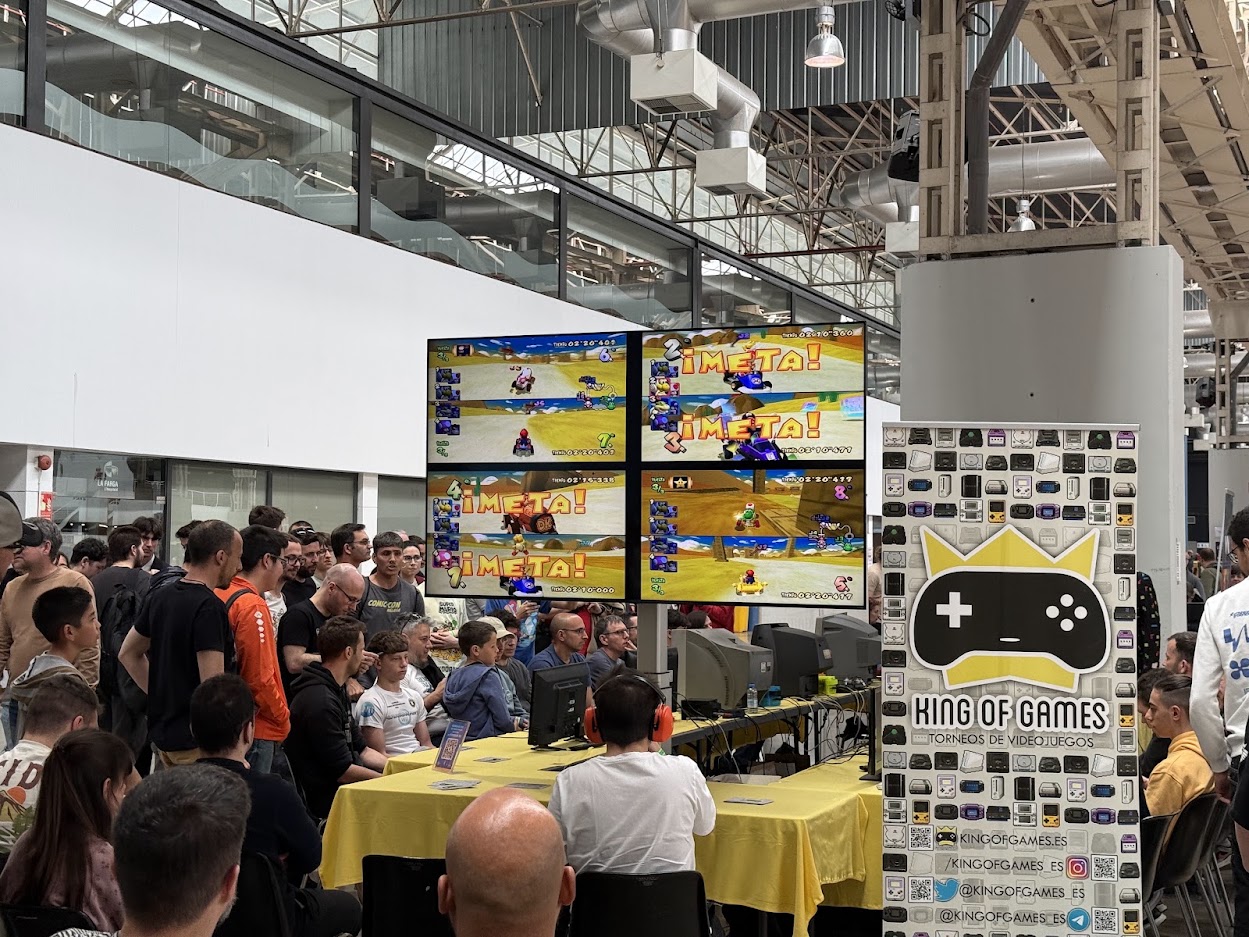
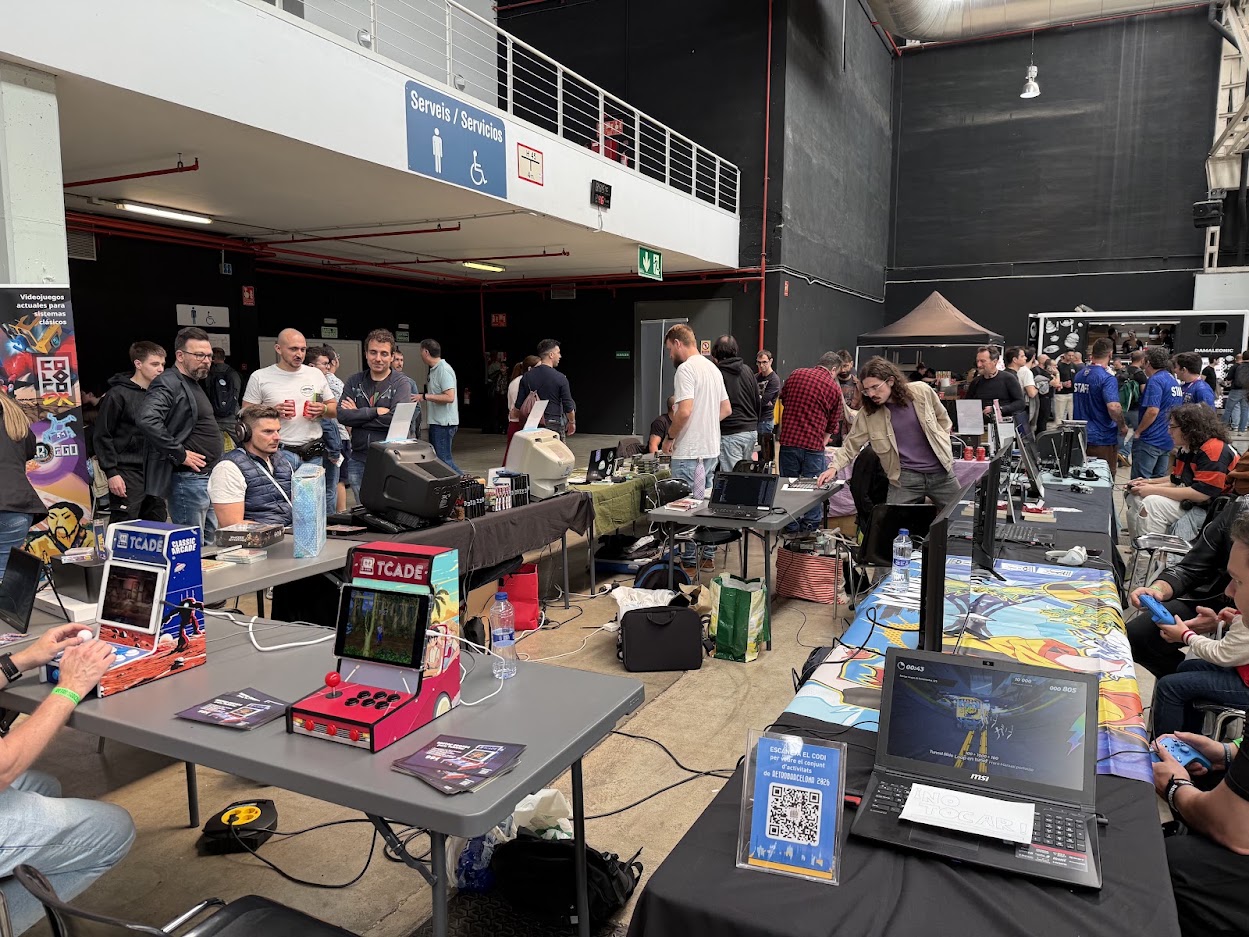
The format stays broadly the same each year. There is a gaming zone with hundreds of playable classic systems, a video game museum covering the history properly, and a sales floor of exhibitors selling retro games, consoles and merchandise. Alongside that sit conferences, official tournaments, talks, podcasts and workshops. It is the one weekend of the year when the whole Catalan retro scene is in the same building.
The event is normally held in May. Dates for the next edition are published on the association’s own site, and our friends at Barna.News covered the 2026 edition in English if you want the full rundown.
Where to shop the rest of the year
Retro Barcelona is once a year. The city’s retro pulse runs year-round in its shops, and these are less retail units than time capsules, each with its own character and its own carefully built stock.
World Viceous, Gràcia
World Viceous sits in the heart of Vila de Gràcia at Carrer del Progrés 42. It is a genuine treasure trove: consoles from 8-bit through 32-bit, a wide spread of games, vintage magazines and the accessories that are always the hard part. They also buy old games, which keeps the stock moving and keeps cherished machines in circulation rather than in landfill. There is an online store if you cannot get there, but the shop itself is the point: the owners know their history and are happy to talk about it.
Airun Retro Games, Encants Nous
Airun Retro Games is at Carrer Dos de Maig 227, in the Encants Nous market. It deals exclusively in retro, which makes for a tighter, more considered selection than a general games shop. It is the sort of place where the cartridge you have been hunting for years finally turns up in a box you nearly did not look in.
RetroPlayZone, Sant Martí
RetroPlayZone is at Carrer de Pere IV 151, in Sant Martí. It is the most comprehensive of the three, covering Mega Drive, Master System, Dreamcast, Game Boy, SNES, N64, Wii, PS2 and PS3 among others, with second-hand consoles sold under warranty. They buy, sell and trade, which makes them as much a marketplace for the community as a shop. Worth phoning ahead if you are after something specific.
Why retro still wins
What keeps pulling us back to these machines? At bottom, retro gaming answers a want for simplicity. Modern games, with their sprawling narratives and endless customisation, can be exhausting. Older games tend to offer a clear objective, controls you understand in thirty seconds, and an unbroken focus on play. The technical limits of the hardware forced developers to invent within tight constraints, and that is precisely what produced design ideas that still hold up.
There is also the art. Pixel art started as a technical necessity and is now a style people choose on purpose. The bold, stylised look of the 8-bit and 16-bit eras has a warmth that the chase for photorealism rarely manages. Those are not just dots on a screen; they are deliberate decisions that produced characters most of us could still draw from memory.
And then there is the company. For a lot of people these games are tied to specific evenings: friends round after school, an argument with a sibling over who got player one, the boss that took a fortnight. Playing them again, or finding them for the first time, builds a bridge between generations and starts conversations that a new release rarely does.
Barcelona, a retro gamer’s city
Barcelona is not only a good-looking European city with a strong food scene. It has a real, active retro gaming community, from the annual noise of Retro Barcelona to the quiet aisles of World Viceous, Airun Retro Games and RetroPlayZone. The past here is not just remembered. It is played, traded and looked after.
So whether you are a collector chasing a rare cartridge, a visitor after something other than another cathedral, or someone who simply wants to hear a Mega Drive boot again, the city is worth your afternoon.
You can also join the Barcelona English Speakers Gaming WhatsApp group to chat and play with like-minded people. And for everything else happening in the city, in English, have a look at Barna.News.
