Category Archives: Collecting

The best products you can buy for the Sega Genesis in 2025!

My OG console, the Sega Megadrive (aka Genesis to the USA) arrived in my house, via Santa Claus – in December 1990. I still remember the joy of seeing the box under the tree and then unwrapping it, unpacking it, and setting it up on the only spare TV we had in the house which was commissioned for child use. It was a 14″ CRT monitor for my Amstrad CPC 6128 which my dad kindly decided to buy the TV base for, so it doubled up as a TV (albeit one you had to manually tune via a knob for each of the 4 channels we had at the time).

I still remember via muscle memory where on the dial each of the channels was and could easily reach behind the TV for the switch to change it to the Megadrive, and tune it to the right frequency in a matter of seconds.

Anyway, fast forward to today – and the Sega Megadrive/Genesis is still alive and kicking, you might argue 2025 could be the best year since 1995 for fans of the console. Not only do we have a long list of games in production for release this year, we also have a live and kicking modding scene to bring all the modern conveniences to the classic console.

In light of the huge retro resurgence that 2024 brought, here is a list of products you can buy now for the Sega Genesis. If I have missed anything worth mentioning, let me know in the comments.

10. HDMI Cable for Sega Genesis Model 1/2 / 3, Sega CD, Sega CDX, Sega 32X, Sega Nomad, Original Sega Master System Console

Ok, so boring af – I get it, but this is a must-have if you do not have a CRT TV lying about (or if you do not have the space for the old beasts). Allowing you to plug in your old console to a modern TV will solve the need for most people looking to hook up their console via HDMI, as a bonus it will also work with the “tower of power” allowing you to connect the 32x as well. The adaptor allows you to switch between 4:3 and 16:9 for that original experience.

Price: $32.99 (Amazon)

Reviews: 4.5 Stars

Link

9. Green Hill Zone Blanket

Looking for some relief from the winter chill? Sega has got you covered (literally) with a Green Hill Zone 100% polyester fleece blanket. I like the vibrant design on this and it’s a good size (50″ x 60″), printed on only one side. A good gift idea for any retro gaming Sega fans.

Price: $49.95 (Sega Store)

Link

8. Mega Turrican Directors Cut

Limited to only 1,500 copies, and at the time of writing down to the last 20% of stock, this classic run and gun with a plethora of weapons and bosses to beat is a modern classic for a genuine classic console. I really like the quality of the games that are provided and this is one of my favourite new games for the console.

Price: $49.99 (Strictly Limited)

Link

7. Alex Kidd “Janken Champion 1986” SEGA Master System video game Hoodie

What is there not to like about Alex Kidd? His crazy ears and his massive fists along with some very good games, have made him a Sega Icon. The Sega-produced hoodie is available in several colours and comes in sizes from S to XXL.

Price: $39.99 (Amazon)

Link

6. Retro-Bit Official Sega Genesis Controller 6-Button Arcade Pad for Sega Genesis – Original Port (Black)

We all agree that the 6 button Sega pads were the GOAT controllers. Right? Right…? Well, I do. The ability to play Streetfighter II without having to use the horrible shoulder buttons on the SNES was the knockout blow for me in this series of console wars. Well, the good folk at Retro-Bit make a damn fine range of controllers that look and feel identical to the original beauties.

Price: $14.99 (Amazon)

Reviews: 4.5 Stars

Link

5. Square Enix Sega Hardware Series “Bright Arts Gallery” diecast metal model

Think you have it all when it comes to collectables? Well, you don’t. You don’t have this $43.99 model Sega Genesis from Square Enix. It is due for release in April 2025 and I can confirm it looks like a Sega Genesis. Sadly it does not play games, and being tiny (H 0.59 in x W 2.36 in x D 1.77 in) it might get lost, but you might also make some profit by snapping one of these collectables up for the future!

Price: $43.99 😳 (Square Enix Store)

Link

4. RetroShell premium quality acrylic Sega Genesis game protectors

Ok, biased here as these are our products but we stand by the quality and need for serious collectors to protect and preserve their collections, whilst being able to display your treasures. Our RetroShell cases are made from 4mm acrylic and allow easy access via a trap door, along with being stackable either horizontally or vertically. We offer free worldwide shipping to our international customers and stand by our promise that these are the finest game protectors in the world.

Price: $18.08 (RetroShell)

Link

3. 8Bitdo M30 2.4G Wireless Gamepad for the Original Sega Genesis

Let’s be real, the cable length on the older consoles was designed for small TVs (huge was 28″) so we could sit too close and “ruin your eyes” (quote from my mum). But we are not in the 90s any more, and not everyone has the official Sega wireless pads (I do 🧐) so the team at 8BitDo have got you covered. I love the quality of their products and this is a beauty which will connect to the OG console and other devices via 2.4g wireless.

Price: $29.99 (Amazon)

Reviews: 4.7 Stars

Link

2. Bitmap Books – Run ‘N’ Gun: A History of on-foot shooters

Not specifically for the Sega Genesis, but I find it hard to make a list of quality products for Sega fans without including a masterpiece from Bitmap Books. All of their books are visually spectacular and the books themselves are very well made and take pride of place in any collection, plus it comes with a free PDF version of the book 😎.

Price: $45.00 (Bitmap Books)

Link

1. Hyperkin RetroN 3 HD 3-in-1 Retro Gaming Console

I will be the first to admit that I am not a huge fan of the quality of this product, it is not FPGA, relying on emulation of the original cartridges to be able to play the games, and the controllers are not great. However, this will play all of your original cartridges, and give you HDMI and will also play Super Nintendo and Super Famicom games. Ideally, you want the Analogue Mega SG – but these are not likely to be for sale any time soon, and if you are lucky you might get a controller for $250+, so the Hyperkin RetroN is a good solution for 720p gaming and a quick and easy setup.

Price: $88.05 (Amazon)

Reviews: 4.2 Stars

Link

So there you have it, a list of products you can buy for the Sega Genesis. If you are reading this far, thanks – I appreciate you. If you love retro gaming, then perhaps you might like to sign up for our free, weekly Retro gaming substack. Click here to view the latest issue.

Never stop gaming.

Welcome to 2025, the Year of the Sega Megadrive / Genesis Getting an Expanded Games Catalogue 😳

The Sega Genesis and Mega Drive communities are set for an exciting year in 2025, with a new game lineup that blends nostalgia with innovation. Here’s a glimpse into some of the most anticipated titles:

Earthion

Developed by legendary composer Yuzo Koshiro, Earthion is a highly anticipated shoot ’em up (shmup) for the Genesis/Mega Drive. Originally slated for a late 2024 release, the game has been delayed to 2025 to ensure a polished experience for players. 

P-47 II MD

A revival of the classic arcade shooter, P-47 II MD is set to launch on March 13, 2025, for the Mega Drive. This release brings back the intense aerial combat that fans of the original series will remember. 

Kirito The Game

An action-packed title for the Sega Genesis/Mega Drive, Kirito The Game has successfully secured funding through Kickstarter. With its campaign fully funded and 58 days to go, the game is on track for development and release. 

Traysia

Originally developed by Telenet Japan, Traysia is a classic JRPG making its return with a new physical edition. This release features a brand-new translation and artwork, with pre-orders open until April 29, 2025, and delivery expected by May 25, 2025. 

Sovietborgs

Set in a post-Cold War universe where the USSR has turned the world into a nuclear wasteland, Sovietborgs is a new release for the Mega Drive. The game is expected to offer a unique narrative and gameplay experience. These titles highlight the dedication and creativity within the retro gaming community, ensuring that the legacy of the Sega Genesis and Mega Drive continues to thrive.

The Mega Drive Tracker is an invaluable resource for a comprehensive list of upcoming releases. It catalogues all new physical releases for Sega’s 16-bit console. 

If you are a Sega Megadrive / Genesis collector, check out RetroShell’s finest video game protectors.

Stay tuned for more updates on these exciting developments in retro gaming!

Lunatic Fighters: A Retro Brawler for the Sega Mega Drive / Genesis 🇧🇷

Retro gaming enthusiasts, get ready for a new contender in the fighting game arena. Lunatic Fighters is an exciting new project currently seeking funding on Catarse. Designed exclusively for the Sega Mega Drive/Genesis, this game brings gritty combat and fast-paced action to your favourite 16-bit console, blending nostalgic visuals with a dark and thrilling storyline.

The Premise

Set in a dystopian future, Lunatic Fighters pits criminals against each other in a brutal arena where survival is the only option. Each character comes with a unique backstory, distinct fighting style, and special moves, creating a rich roster that adds depth to the brawling experience.

Gameplay Features

Dynamic Combat: Players will enjoy intense one-on-one battles with tight controls and fluid animations that push the Mega Drive hardware to its limits.

Customisable Modes: Explore both single-player campaigns and multiplayer battles with various modes that cater to competitive and casual players alike.

Retro Visuals: Classic 16-bit pixel art brings the game’s dark and gritty world to life, complemented by a killer chiptune soundtrack.

Support the Project

The developers of Lunatic Fighters are crowdfunding on Catarse to bring this ambitious project to life. Backers can choose from a range of rewards, including digital copies of the game, physical cartridges, and exclusive merchandise. By supporting this campaign, fans not only contribute to the production of a new game but also help keep the Sega Mega Drive’s legacy alive.

Why It Matters

Projects like Lunatic Fighters are a testament to the enduring appeal of retro gaming and the creativity of the indie development community. They breathe new life into classic hardware, offering fans the chance to experience something fresh while celebrating the timeless charm of 16-bit gaming.

Join the Fight

The campaign is now live on Catarse, and early backers can secure exclusive rewards and help shape the future of this promising title. If you’re a fan of retro brawlers, now is the time to support Lunatic Fighters and ensure its place in the Mega Drive’s legendary library.

Visit Catarse to learn more and support the campaign today!

Uncovering Forgotten Gems: Rare Taiwanese and Korean Sega SG-1000 Games Found and Shared

Retro gaming enthusiasts are in for a treat this winter as SMS Power gives an extraordinary gift: the release of rare game dumps from Taiwan and Korea. This event underscores SMS Power’s ongoing dedication to preserving the history and legacy of Sega’s Master System and Game Gear platforms.

What’s New?

Among the highlights are two Game Gear titles from Korean developers and one extremely elusive Taiwanese Master System game. These games not only offer a glimpse into the unique regional development scenes of the ’80s and ’90s but also expand our understanding of how Sega consoles were embraced and adapted outside of Japan and Western markets. There is also a release of “The Goonies” from Konami amongst some of the games released.

Taiwanese Master System Gem:

The Master System dump unveils a rare, long-forgotten title previously thought to be lost. Taiwanese developers were known for crafting unofficial or exclusive games tailored to local tastes, and this particular release offers fascinating insights into the creativity and resourcefulness of the region’s game creators.

Korean Game Gear Titles:

Korea’s contribution includes two Game Gear games that exemplify the innovative spirit of Korean developers during the 16-bit era. From unique mechanics to cultural influences, these games shine a light on a lesser-known but vibrant gaming community.

Preserving History

These releases represent SMS Power’s commitment to game preservation. By making these rare titles available to the public, the retro gaming community can not only enjoy these games but also contribute to their preservation for future generations. Such efforts are vital for ensuring the global gaming story is complete, capturing the often-overlooked contributions of smaller markets.

Why This Matters

For collectors, historians, and casual fans, these dumps provide a unique opportunity to experience games that never made it to mainstream audiences. Whether you’re looking to add something truly special to your library or delve into gaming history, these releases are a testament to the diversity and innovation of the Sega community worldwide.

Explore the Archives

The games are now available for download through SMS Power’s forums, accompanied by detailed descriptions and community discussions about their historical and cultural significance. As a bonus, they also highlight the vibrant, collaborative spirit of the retro gaming community.

If you’re passionate about retro gaming, don’t miss this chance to explore these rare finds and celebrate the creativity of Sega fans across the globe.

If you are looking for the best game protectors for Sega, you should check out RetroShell’s range of premium game display protectors.

Lost Treasure of Lima Brings Adventurous Platforming to the Game Boy

Retro gaming enthusiasts have a new adventure to embark upon with the release of Lost Treasure of Lima for the Game Boy. Developed by indie creator drgd_retro and published by Broke Studio, this platformer combines environmental puzzles, exploration, and time-sensitive action sequences across four engaging levels. 

Inspired by the legendary 1820 disappearance of Lima’s riches, players assume the role of adventurer Sebastian Madsen, navigating diverse terrains in pursuit of the elusive treasure. The game offers hidden collectibles and secret endings, enhancing replayability for those seeking a comprehensive experience.

The physical edition, priced at €50, includes a brand-new cartridge, protective case, full-color manual, and a digital ROM file compatible with emulators. The game has been tested on authentic Game Boy hardware, including DMG, Color, and Advance models, as well as the Analogue Pocket, ensuring broad compatibility for players. 

For those preferring a digital experience, Lost Treasure of Lima is available for download on itch.io for $9.99 USD, providing the ROM file and a digital instruction booklet. 

This release underscores the enduring appeal of the Game Boy platform and the vibrant creativity within the indie game development community. Whether you’re a collector or a fan of retro gaming, Lost Treasure of Lima offers a nostalgic journey reminiscent of classic handheld adventures.

For more information or to purchase the game, visit Broke Studio’s official website

What If Sonic Had a Mainline Game on the Sega Saturn? Exploring the Possibilities

The Sega Saturn holds a fascinating yet polarising place in gaming history. Its hardware was innovative but notoriously complex, and its short lifespan left many wondering what could have been—especially when it came to Sonic the Hedgehog. Despite being Sega’s mascot, Sonic never had a true mainline game on the Saturn, a glaring omission that fans have speculated about for decades.

Let’s dive into the possibilities of a Sonic mainline game for the Sega Saturn. Along the way, we’ll explore the Sonic games that didmake it to the console, dispel myths about the Saturn’s capabilities, and highlight fan projects that give us a glimpse of what might have been.

The Sonic Saturn Games We Did Get

Contrary to popular belief, Sonic wasn’t entirely absent from the Saturn. During the console’s brief lifespan, three Sonic titles were released:

1. Sonic 3D: Flicky’s Island (1996)

This isometric platformer was originally developed for the Mega Drive but received an enhanced Saturn port. While the main gameplay remained the same, the Saturn version featured improved visuals and new 3D-rendered special stages created by Sonic Team themselves.

2. Sonic R (1997)

Developed by Traveller’s Tales with support from Sonic Team, this on-foot racing game pushed the Saturn’s hardware to its limits. With catchy music, innovative track design, and collectible elements, Sonic R remains a cult classic, despite its polarising controls.

3. Sonic Jam (1997)

A compilation of Sonic’s Mega Drive titles, Sonic Jam offered a unique bonus feature: Sonic’s World, a fully 3D Green Hill Zone hub. Players could explore, view galleries, and complete time challenges, offering a tantalising glimpse of what a 3D Sonic platformer could have looked like on the Saturn.

The Myth of the Saturn’s Limitations

A common misconception is that the Saturn lacked the power for a true 3D Sonic game. While the hardware was indeed complex, it was far more capable than its critics claim. Games like Burning RangersNights into Dreams, and even Sonic R showcase the Saturn’s ability to handle 3D graphics with impressive results.

One persistent myth is that the Saturn couldn’t handle transparencies, often relying on a dithered mesh effect instead. However, examples like the translucent ghosts in Casper or fire effects in Burning Rangers debunk this notion. Similarly, claims that the Saturn couldn’t do 3D at all ignore titles like Panzer Dragoon and Virtua Fighter 2, which delivered stunning 3D experiences.

What Really Happened to Sonic on the Saturn?

The Saturn’s lack of a mainline Sonic game wasn’t due to hardware limitations but rather organisational and creative conflicts within Sega. The most infamous example is Sonic X-treme, a 3D platformer in development at Sega Technical Institute (STI).

Unveiled at E3 in 1996, Sonic X-treme promised a bold new direction for Sonic, with a fisheye lens perspective and a gameplay style reminiscent of Bug. However, the project faced constant setbacks, including health crises among key developers and conflicts with Sonic Team. When Yuji Naka discovered that STI was using the Nights into Dreams engine without his permission, he threatened to quit Sega, effectively killing the project.

Instead, Sega ported Sonic 3D: Flicky’s Island to the Saturn as a stopgap measure, leaving fans with a sense of what could have been but never delivering a definitive 3D Sonic experience.

Fan Projects: Reimagining Sonic on the Saturn

In recent years, fans have stepped in to fill the void, creating games that explore what Sonic could have been on the Saturn. Two notable projects include:

1. Sonic Robo Blast 2 (SRB2)

Built on a modified Doom engine, SRB2 captures the spirit of a Saturn-era Sonic game with 3D platforming, exploration, and speed. While its visuals and mechanics might exceed what the Saturn could achieve, SRB2 offers a nostalgic glimpse into a possible alternate history.

2. Sonic Ultra Saturn

This 2D fan game leans into the Saturn’s ability to produce stunning sprite-based visuals. While impressive, it highlights the challenge Sega would have faced releasing a 2D Sonic game in the mid-’90s, when consumer appetites were firmly focused on 3D gaming.

The Legacy of Sonic and the Saturn

Though the Saturn never received a true mainline Sonic game, its contributions to the franchise shouldn’t be overlooked. Sonic’s Worldin Sonic Jam laid the groundwork for the fully 3D hub world seen in Sonic Adventure, while Sonic R demonstrated the potential of 3D Sonic gameplay.

In hindsight, the Saturn was a stepping stone—a console that bridged the 2D and 3D eras of gaming. Sonic’s Saturn years were a time of experimentation and transition, paving the way for his successful leap to 3D on the Dreamcast.

Conclusion: What Could Have Been

Imagining a mainline Sonic game on the Sega Saturn is both an exercise in nostalgia and a testament to the creativity of fans and developers alike. With its complex hardware and short lifespan, the Saturn may have been an underdog, but it was far from incapable. A 3D Sonic platformer might not have saved the console from its commercial struggles, but it could have left a lasting impression on the franchise’s history.

Now it’s your turn: What would your ideal Saturn-era Sonic game look like? Share your thoughts in the comments, and let’s keep the conversation going about Sega’s most enigmatic console.

Building the Ultimate Dreamcast: A Step-by-Step Guide to the Ultimate Retro Console

The Sega Dreamcast, with its legendary 9/9/99 release date, recently celebrated its 25th anniversary. This console, Sega’s swan song in gaming hardware, remains a fan favourite thanks to its innovative features and unforgettable games like Sonic AdventureShenmue, and Resident Evil Code: Veronica.

To honour this iconic system, we’re diving into what it takes to build the ultimate Dreamcast—a modernized version of the retro console that combines cutting-edge mods, thoughtful upgrades, and a splash of personal style. Whether you’re a modding enthusiast or a retro gaming fan looking to revitalise your setup, this guide will inspire your next Dreamcast build.

Step 1: Starting with a Rare VA0 Dreamcast Model

Our build begins with the VA0 Dreamcast model, the first revision of the console. While externally identical to other Dreamcasts, the VA0 features a unique and robust cooling system with heat pipes and a metal heat sink. This rarity makes it an ideal base for an upgraded system designed to handle modern modifications.

Step 2: Installing the GDEMU Optical Drive Emulator

The first major upgrade is the GDEMU, an optical drive emulator that replaces the original GD-ROM drive with a modern SD card-based solution. This eliminates the wear-and-tear risks of mechanical drives and provides faster loading times for your favourite games.

However, the VA0 model requires some tweaking—specifically, replacing resistors to adjust the voltage from 5V to 3.3V to ensure compatibility with the GDEMU. It’s a small but necessary step to keep this mod running smoothly.

Step 3: Adding a Custom BIOS Chip

Next, we replace the original BIOS chip with a custom BIOS that enables region-free gaming and introduces a custom startup animation. While the GDEMU allows for playing imports, the BIOS upgrade enhances the console’s capabilities and adds a personalised touch. This chip also unlocks quirky features, such as a modified boot screen, making the Dreamcast truly your own.

Step 4: Upgrading to HDMI with PixelFX Retro GEM

No modernised console is complete without crisp, high-definition visuals. The PixelFX Retro GEM HDMI kit transforms the Dreamcast’s output, offering up to 1440p resolution via a full-size HDMI port. The mod includes scaling options, aspect ratio adjustments, and even a direct mode that allows you to connect the console to an external scaler for even more customization.

This mod is challenging to install, requiring precise soldering of a ribbon cable, but the end result is a Dreamcast that looks stunning on today’s 4K TVs.

Step 5: Swapping the Shell for a Custom Look

To give the console a fresh aesthetic, swap the original casing for a translucent Sonic Blue shell. The vibrant colour modernises the look while preserving some of the original charm by reusing the grey buttons, controller port shroud, and lid hardware. The result is a visually striking console that feels authentic and contemporary.

Step 6: Installing a USB-C Power Supply

The Dreamcast’s original power supply operates at Japan’s 100V standard, limiting its usability in other regions. By installing a USB-C power supply, the console becomes universally compatible and capable of running on 100V, 120V, or 240V standards. This upgrade also allows for a sleek, modern power setup with a USB-C charger, reducing the console’s footprint and adding convenience.

Step 7: Improving Cooling and Fan Noise

The VA0’s fan was lubricated with bearing oil to improve performance and reduce noise, while outdated thermal pads were replaced with high-quality alternatives. These small tweaks ensure the console runs cooler and quieter, preserving its longevity and enhancing the gaming experience.

Step 8: Enhancing the Controller Setup

To complete the ultimate Dreamcast, we upgraded to the Retro Fighter Striker Wireless Controller. This modern accessory offers wireless convenience while maintaining compatibility with the VMU. While other controllers like the DreamConn+ offer even more advanced features, such as internal VMU support, their premium price may not suit every budget.

For added flair, the VMU itself was swapped out for the VM2, which features a backlit display, USB-C charging, and virtually unlimited storage via microSD cards. These enhancements make the Dreamcast’s unique memory system more functional and user-friendly.

Step 9: Final Touches and Troubleshooting

The final steps involved resolving a compatibility issue with the GDEMU by 3D-printing a custom bracket and adding a unique custom BIOS startup screen for an extra dose of personality. After troubleshooting and fine-tuning, the build was complete—a fully tricked-out Dreamcast that combines retro charm with modern convenience.

Why Build the Ultimate Dreamcast?

The Dreamcast is more than a gaming console; it’s a piece of history. Building the ultimate Dreamcast breathes new life into this beloved system, allowing it to shine on modern hardware while preserving its legacy. From high-definition visuals to wireless controllers, this project proves that retro consoles can evolve without losing their nostalgic appeal.

Conclusion: A Dream Revived

This Dreamcast build showcases the incredible potential of the retro modding community and highlights why the console remains a favourite among gamers. Whether you’re playing classics like Shenmue or exploring indie titles, this setup offers the ultimate Dreamcast experience.

What mods would you add to your Dreamcast? Share your thoughts in the comments, and stay tuned for more retro gaming projects. If you’re looking to modernise your Dreamcast, this build is the perfect blueprint to get started.

Source.

Discover “Dragonyhm”: The Retro RPG That’s Reviving Game Boy Color Magic

ModRetro Chromatic Unveils New Fantasy Adventure

In an era where nostalgia meets innovation, ModRetro introduces “Dragonyhm,” a new role-playing game (RPG) that promises to captivate fans of the classic Game Boy Color. Available for pre-order, this title not only brings back the charm of yesteryears but also introduces it to a new generation of gamers.

An Epic Tale Set in Archend

“Dragonyhm” plunges players into a vivid fantasy world where peace has long settled after a brutal conflict with dragons. The tranquillity is shattered when the esteemed protector, Kurtis, vanishes, leading to the awakening of sealed dragons. Players take on the role of Kris, Kurtis’s son, embarking on a quest to find his father and restore peace to the kingdom of Archend.

Gameplay That Honors Tradition

This game combines real-time exploration with classic turn-based battles, offering a gameplay experience that feels both familiar and fresh. Whether navigating through the main dungeons, which vary in complexity and are rich with narrative or tackling the sealed dungeons housing the mightiest dragons, “Dragonyhm” respects the legacy of RPG mechanics while adding modern twists.

Why “Dragonyhm” Stands Out

  • Compatibility: While designed for the ModRetro Chromatic, “Dragonyhm” remains compatible with original Game Boy Color consoles, ensuring accessibility for all retro gaming enthusiasts.
  • Collector’s Appeal: The game comes with a host of collector-friendly items including a sealed box, a clear back cartridge, an instruction booklet, and unique artwork on the PCB.
  • Narrative Depth: The storyline is crafted with depth, featuring memorable characters and a rich backstory that unfolds as you explore the land of Archend.

Source and link to buy.

The Cutting Edge of Game Preservation: A Look Inside Square Enix, Capcom, Taito, and Sega’s Archives

In the heart of Tokyo at the SIGGRAPH Asia 2024 conference, a remarkable endeavour was unveiled, one that delves into the rich cultural tapestry of video game creation. Four leading companies in the gaming world – Square Enix, Capcom, Taito, and Sega – have embarked on a journey to archive their historical development materials, transforming what was once deemed expendable into precious historical treasures for research and exhibition.

The Cultural Significance of Gaming Archives

Video games have evolved from mere pastimes to cultural phenomena, with their development materials from the 80s and 90s, like blueprints and sketches, becoming pivotal historical items. These artefacts provide insights into how games were conceptualized and crafted, fostering an understanding of the evolution of video game design, technology, and art.

Square Enix’s Trailblazing Archival Work

Square Enix, led by AI researcher Yoichiro Miyake, has been at the forefront of this archival movement. Since 2019, Miyake has been exploring the archives of Enix before its merger with Square, revealing materials previously undocumented. This discovery likened to finding a “treasure trove,” has sparked a project to digitize and manage these assets for future use, involving the photographing of physical items and their conversion into digital formats for research.

Capcom’s Archival System – CIAS

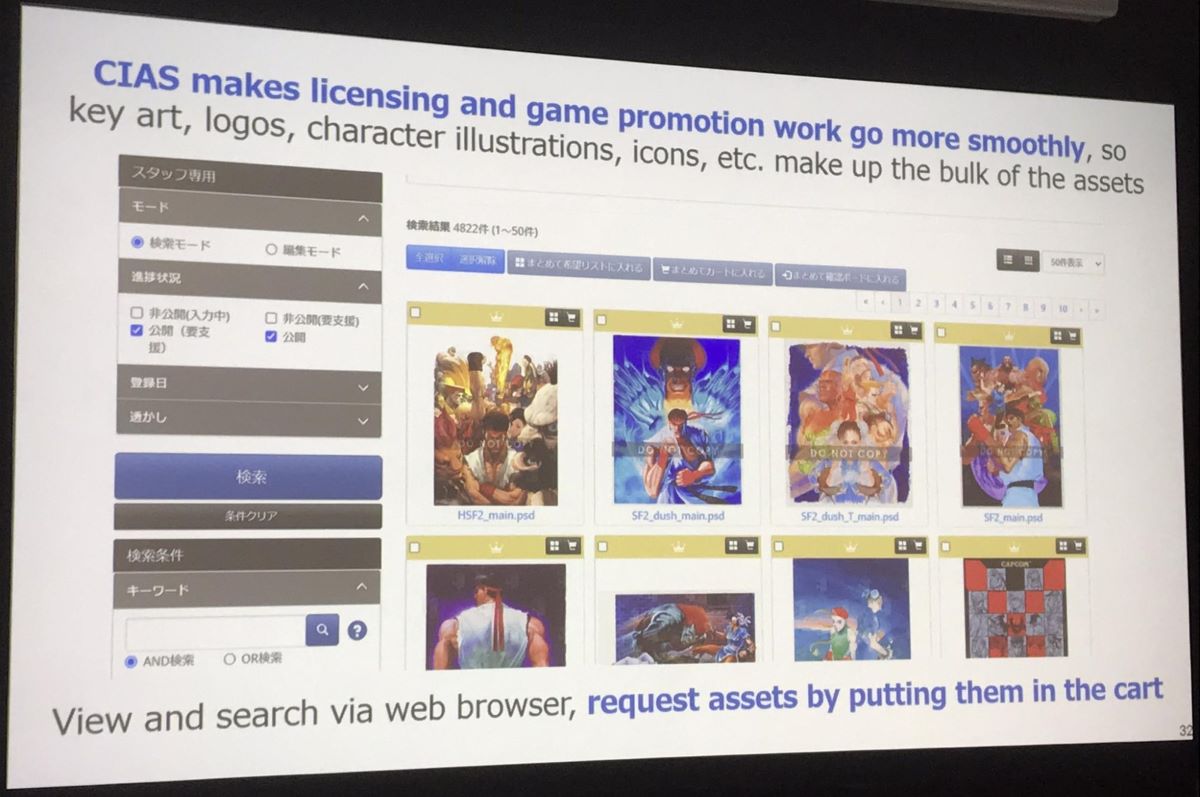
Capcom has developed the Capcom Illustrations Archives System (CIAS) to manage its historical assets, focusing on art and design elements for games like “Street Fighter” and “Rockman.” This system not only preserves these assets but also leverages them for current marketing and game development, showcasing a practical application of historical preservation.

Taito’s Challenges and Triumphs in Legacy Preservation

Taito, with its roots deep in arcade gaming history since 1953, faces unique challenges in preservation, including space and material deterioration. Despite these obstacles, they maintain a vast archive of arcade hardware, software, and even microfilms, which they proudly display at events commemorating their legacy.

Sega’s Recent Dive into Preservation

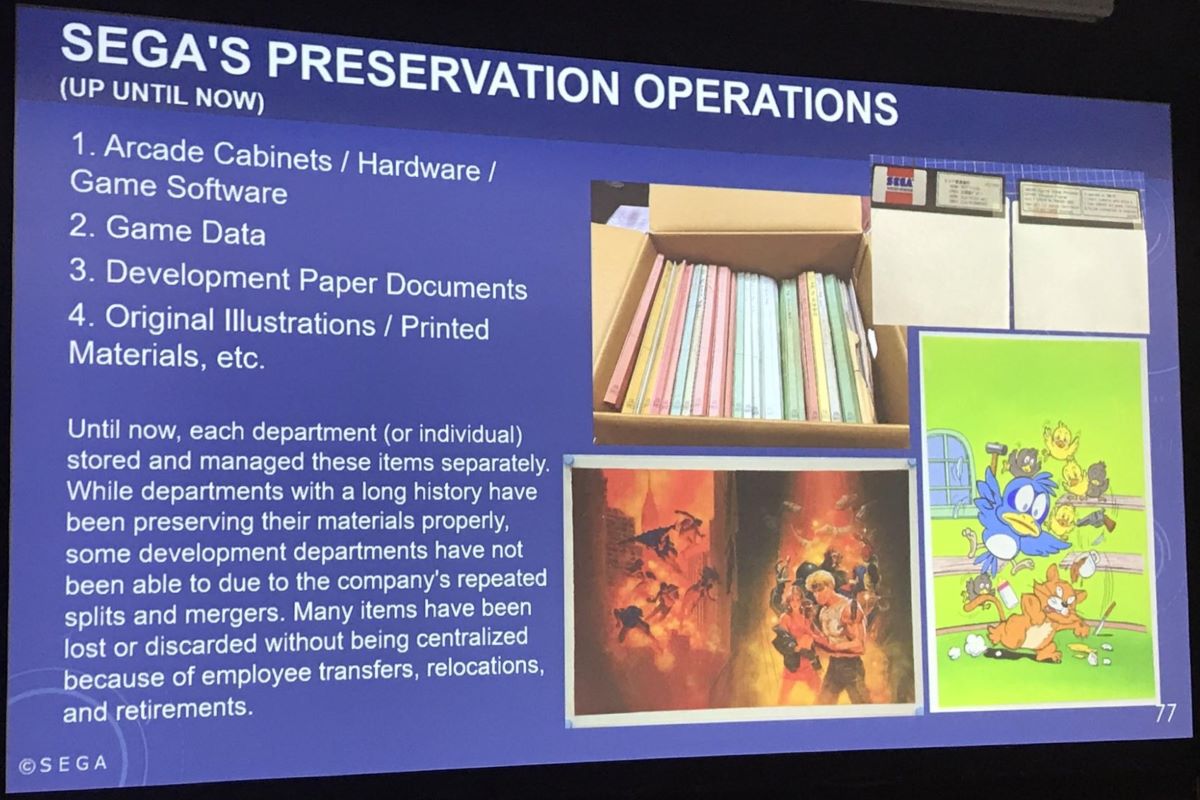
Sega, starting its preservation efforts in 2023, is now aggressively digitizing and cataloguing its past, from arcade machines to original artwork. This initiative includes plans to incorporate materials from subsidiaries like Atlus, aiming to create a comprehensive historical database.

Preserving the Physical: The Role of Game Boxes

The physical packaging of games, especially from the golden age of consoles like the NES and SNES, holds significant cultural and artistic value. These boxes are not just containers but pieces of art that reflect the era’s design and marketing ethos. Preserving them is crucial for collectors and historians to experience games as they were initially presented. For those keen on safeguarding these relics, RetroShell (www.retroshell.com) provides an array of display protectors designed to keep your collection safe from environmental damage, ensuring these artefacts can be enjoyed for years to come.

The Broader Impact of Preservation

The collective effort by these companies underscores a commitment to not just preserve history but to use it as a foundation for future innovation. This archival work teaches us about our past, informing current and future creators while also celebrating video games as cultural artefacts.

Envisioning the Future

As articulated by Yoichiro Miyake, the preservation of these materials is about building a bridge between generations of creators. By maintaining these archives, the industry ensures a continuous dialogue that honours its history while paving the way for future advancements.

This initiative highlighted at SIGGRAPH Asia 2024 not only showcases the industry’s dedication to cultural heritage but also serves as a model for preservation across various fields, safeguarding a slice of digital culture for future generations to study and enjoy.

Source.

The Evolution of Game Controllers: From A/B to X/Y

In the world of video games, the humble game controller has undergone significant transformations, not just in design but in functionality, reflecting the evolution of gaming itself. One pivotal change was the transition from the “A/B” buttons of the original NES to the “X/Y” and “L/R” buttons introduced with the Super Nintendo Entertainment System (SNES). But why did we get “X/Y” instead of “C/D”? Let’s dive into this intriguing piece of gaming history.

The Birth of the Modern Controller

When the NES hit the markets in 1983, its controller was revolutionary. It featured a simple cross-shaped directional pad (D-pad) and two buttons, labeled A and B. This basic setup was enough to spawn a gaming revolution, offering gameplay mechanics that were novel at the time. The dual controller ports from the outset made multiplayer gaming accessible, contributing significantly to the NES’s success.

The Leap to More Buttons

By the time the SNES was released in 1990, the gaming landscape had changed. Games were becoming more complex, and the demand for additional controls was evident. Enter the SNES controller with its six buttons: A/B, X/Y, and L/R. This wasn’t just an upgrade; it was a response to the needs of gamers, particularly influenced by the success of arcade games like “Street Fighter II,” which required more buttons for its intricate move sets.

Shigeru Miyamoto, a key figure at Nintendo, attributed the increase to six buttons to the necessity of accommodating games like “Street Fighter II” in home consoles. But why choose “X/Y” over “C/D”?

Visual and Functional Differentiation

Miyamoto’s reasoning was simple yet profound: visual differentiation. He explained that while the fundamental gameplay could rely on the cross key and A/B buttons, adding more buttons needed to be intuitive. “A/B” and “X/Y” clearly separate into two distinct groups, making it easier for players to learn and remember the functions of each button without confusion. Using “C/D” would have muddled this distinction, potentially making games less intuitive.

Moreover, “L/R” for “Left/Right” was a straightforward choice, aligning with the physical placement of these buttons on the controller. This naming convention helped in understanding the role of these buttons in games like “F-ZERO,” where they provided additional control over the vehicle’s movements, enhancing the gameplay experience.

A Legacy of Innovation

This thoughtful approach to controller design has left a lasting impact on how games are developed and played. The “X/Y” buttons have become standard in many controller designs, not just for Nintendo but across the industry, proving the foresight in Miyamoto’s decision.

Today, controllers continue to evolve, with innovations like motion controls, touch interfaces, and specialized controllers like the “Ring-Con” for “Ring Fit Adventure.” Each new iteration aims to deepen immersion, increase accessibility, or cater to specific game genres, showing that the controller’s story is far from over.

The Future of Gaming Input

As we look to the future, one can only speculate how controllers might evolve. Will we see more ergonomic designs, haptic feedback beyond what we currently know, or perhaps interfaces that blend digital and physical interactions in new ways? Whatever the future holds, the legacy of the SNES controller’s design philosophy will undoubtedly influence it, emphasizing user experience, game design, and the joy of play.

The transition from A/B to X/Y was more than a simple change in nomenclature; it was a step towards making gaming more accessible, intuitive, and enjoyable for players around the world. As gaming continues to grow, so too will the tools we use to engage with these digital worlds, forever changing how we interact with entertainment.

If you are in to retro game collecting, check out RetroShell premium game display protectors, they are of the finest quality and the best way to protect your valuable collection.