The latest entry in the Mario & Luigi RPG series, Mario & Luigi: Brothership, has just received its first post-launch update, bringing a range of fixes and improvements. Version 1.0.1 is now available for download, addressing some early issues reported by players and refining the overall gameplay experience.
Credit: Nintendo
Among the most notable changes are stability improvements, which should help prevent occasional crashes that some users encounter. Additionally, the update includes various bug fixes, such as resolving certain dialogue errors and improving the consistency of character animations in specific cutscenes.
One of the more welcome tweaks is a minor balance adjustment, particularly in some of the game’s more challenging encounters. Some enemies had been slightly overturned in difficulty, and this patch makes battles a bit more manageable without sacrificing the game’s strategic depth. Players have also reported that certain side quests and collectables had minor glitches, and the patch notes confirm that these issues have now been addressed.
Beyond these technical updates, Mario & Luigi: Brothership remains a vibrant and engaging RPG that continues the legacy of the beloved series. With its signature humour, clever combat mechanics, and charming story, fans have been eager to dive into the latest adventure featuring the iconic duo.
While this patch focuses on fixes rather than new content, it’s reassuring to see that the developers are actively supporting the game. Future updates may bring additional enhancements or even new features, but for now, Version 1.0.1 ensures a smoother and more polished experience for players. Here is a link on how to update.
Protect your collection! If you’re a retro game collector, safeguard your treasures with RetroShell, the world’s finest game protector. And if you’re just here for the latest retro gaming news, subscribe to our free Substack—delivered fresh every Monday!
Speedrunners and glitch hunters in Super Mario 64 continue to push the game to its limits, and their latest discovery is as impressive as it is seemingly pointless. A recently unearthed trick allows Mario to stand motionless underwater—a feat that requires an astonishingly precise sequence of 41 button inputs.
The technique, uncovered by dedicated members of the Super Mario 64 speedrunning community, demands an extraordinary level of dexterity and timing. While it currently serves no practical purpose in speedrunning or casual play, it stands as yet another example of the game’s deep and complex mechanics, even decades after its release.
This glitch joins a long list of intricate exploits that fans have found over the years. Super Mario 64 remains one of the most dissected games in history, with speedrunners continuously discovering new ways to manipulate its physics and behaviour. From wall-clipping tricks to movement exploits, each new find contributes to the game’s rich legacy within the speedrunning world.
The discovery of this underwater standing technique may not revolutionize the speedrunning meta, but it highlights just how much Super Mario 64 still has to offer for those willing to dig deep. Whether future research into the glitch leads to a useful application remains to be seen, but for now, it’s a fascinating display of skill, patience, and sheer dedication to uncovering the game’s hidden possibilities.
Protect your collection! If you’re a retro game collector, safeguard your treasures with RetroShell, the world’s finest game protector. And if you’re just here for the latest retro gaming news, subscribe to our free Substack—delivered fresh every Monday!
Limited Run Games, a company known for publishing physical editions of modern and retro-inspired titles, is under fire for allegedly producing NES cartridges that could potentially harm consoles. Reports from collectors and retro gaming enthusiasts suggest that these new cartridges may cause damage to the internal components of original NES hardware, sparking concerns across the community.
Rugrats may harm your console, picture credit Limited Run Games
The issue first came to light when multiple users reported their NES systems malfunctioning after using Limited Run’s cartridges. Some claim that improper voltage regulation or poor manufacturing could be to blame, with affected consoles showing symptoms ranging from graphical glitches to complete hardware failure. Given that many retro gamers rely on original hardware for an authentic experience, this controversy has raised serious alarm.
Limited Run Games contacted John Riggs who shared the content of the email (below) where they confirmed that “due to an issue with the voltage regulation, there is a small chance that prolonged use of these titles could result in damage to either the cartridge or the console hardware” 😳. The blame has been put on a supplier that is not their regular partner. The games in question are RugRats and PiioPow, both of which have sold out and are no longer available.
My email from Limited Run. Looks like my copy of Rugrats will just stay in the box.
This incident underscores the risks associated with modern reproductions of retro hardware. While many companies have successfully released high-quality cartridges in recent years, quality control issues can still arise, and collectors are now questioning whether enough testing was conducted before these products hit the market.
For now, affected users are advising others to avoid inserting these cartridges into their NES systems until further investigation clarifies the risks. The retro gaming community will be closely monitoring the situation, waiting to see if Limited Run responds with a solution or refund policy.
Protect your collection! If you’re a retro game collector, safeguard your treasures with RetroShell, the world’s finest game protector. And if you’re just here for the latest retro gaming news, subscribe to our free Substack—delivered fresh every Monday!
The Nintendo 64 is often remembered for its groundbreaking 3D graphics, iconic games, and enduring legacy. However, one of its most debated design choices was Nintendo’s insistence on sticking with cartridges instead of embracing CDs—a decision that ultimately led to a major rift between Nintendo and one of its biggest third-party developers, Squaresoft.
Recently resurfaced information from an interview with Venturebeat reveals that Squaresoft actively lobbied Nintendo to adopt CD technology for the N64, believing it was the superior format for the future of gaming. At the time, CDs offered vastly greater storage capacity, allowing for high-quality audio, full-motion video, and expansive game worlds—features that the cartridge format simply couldn’t match. Squaresoft, known for its ambitious RPGs like Final Fantasy VI, saw this as a crucial opportunity to push the medium forward.
Nintendo, however, remained firm in its commitment to cartridges, prioritizing faster load times and lower piracy risks over storage concerns. This decision ultimately pushed Squaresoft toward Sony and the PlayStation, where it would go on to develop Final Fantasy VII, a title that became a defining moment in gaming history and a massive blow to Nintendo’s dominance.
Had Nintendo agreed to Squaresoft’s proposal, the N64’s library could have looked drastically different. Imagine Final Fantasy VII on a Nintendo console, alongside the likes of The Legend of Zelda: Ocarina of Time and Super Mario 64. Instead, the divide between Nintendo and Squaresoft lasted for years, only beginning to mend in the early 2000s.
While the N64 still produced legendary titles, the absence of major third-party RPGs left a gap in its library that Sony readily filled. This episode serves as a reminder of how a single hardware decision can reshape the gaming industry for decades to come.
Protect your collection! If you’re a retro game collector, safeguard your treasures with RetroShell, the world’s finest game protector. And if you’re just here for the latest retro gaming news, subscribe to our free Substack—delivered fresh every Monday!
JRPG fans have another reason to celebrate, as Argos no Senshi—the Japan-exclusive NES classic—has finally received a full English translation. Thanks to the dedicated efforts of the ROM hacking community, players can now experience this action-packed adventure without the language barrier.
Credit: Rom Hack Plaza
Originally released in Japan for the Famicom, Argos no Senshi is known in the West as Rygar on the NES. However, the two versions differ significantly, with the Japanese release featuring a more arcade-like progression rather than the RPG-style mechanics of its Western counterpart. This new translation preserves the original gameplay while making the story and dialogue fully accessible to English-speaking audiences.
The translation project not only converts the game’s text but also fine-tunes certain aspects to improve the overall experience. Menu options, in-game prompts, and item descriptions have all been localized, allowing players to navigate the game with ease. The translation team has also worked to maintain the game’s original charm while enhancing clarity for modern players.
This effort highlights the continued passion of the retro gaming community, ensuring that hidden gems like Argos no Senshi reach a broader audience. Now, players who may have been hesitant to dive into the Japanese version can enjoy the game as it was originally intended, you can find the game at Rom Hack Plaza.
For those eager to try it out, the translated ROM can be patched onto the original Japanese version using standard translation tools. With this release, Argos no Senshi is finally breaking language barriers, bringing a piece of gaming history to a whole new audience.
Protect your collection! If you’re a retro game collector, safeguard your treasures with RetroShell, the world’s finest game protector. And if you’re just here for the latest retro gaming news, subscribe to our free Substack—delivered fresh every Monday!
The Game Boy Advance e-Reader was one of Nintendo’s more unusual peripherals—an add-on that allowed players to swipe special cards to unlock content in compatible games. Despite its innovative concept, it never gained widespread popularity, especially outside Japan. But in 2025, the e-reader is making an unexpected comeback, thanks to a passionate group of developers creating brand-new games for the long-dormant accessory.
RetroDotCards, a company dedicated to reviving classic gaming experiences, has launched a new series of e-reader-compatible cards. Their Series One collection features freshly developed mini-games and utilities that breathe new life into the GBA’s overlooked peripheral. Players can swipe these new cards through the e-Reader to access exclusive content, much like they would have back in the early 2000s.
Unlike the original e-reader cards, which were primarily used for small NES game downloads and Pokémon bonuses, RetroDotCards aims to push the limits of what the accessory can do. Their new releases include fast-paced arcade-style games, puzzle challenges, and even homebrew applications that enhance the GBA’s functionality.
I'm making new games for the Nintendo GBA E-Reader. Here's a sampling of the games scheduled for the first pack. More details at retrodotcards.com
The project has sparked excitement among collectors and enthusiasts who appreciate the ingenuity behind these modern retro releases. Given how scarce e-reader content was outside Japan, this new wave of support is particularly significant for Western fans who never had the chance to explore the add-on’s full potential.
With physical media and retro hardware seeing a resurgence in popularity, projects like this highlight the ongoing dedication of the retro gaming community. Whether you missed out on the e-reader the first time or still have one collecting dust, RetroDotCards offers a compelling reason to dig it out and give it another shot.
Protect your collection! If you’re a retro game collector, safeguard your treasures with RetroShell, the world’s finest game protector. And if you’re just here for the latest retro gaming news, subscribe to our free Substack—delivered fresh every Monday!
My week in gaming has been dominated by Elden Ring, it has been a while since I have been this involved in a game and I am enjoying the difficulty and the world.
39 stories this week across the word of retro gaming including some new F-Zero courses, a new Punch Out speedrun record, mapping out the entire Mario planet, GTA 8-Bit and lots more.
News
🎮 Glover is set to launch on Nintendo Switch, bringing the cult N64 platformer to modern audiences. Retroshell
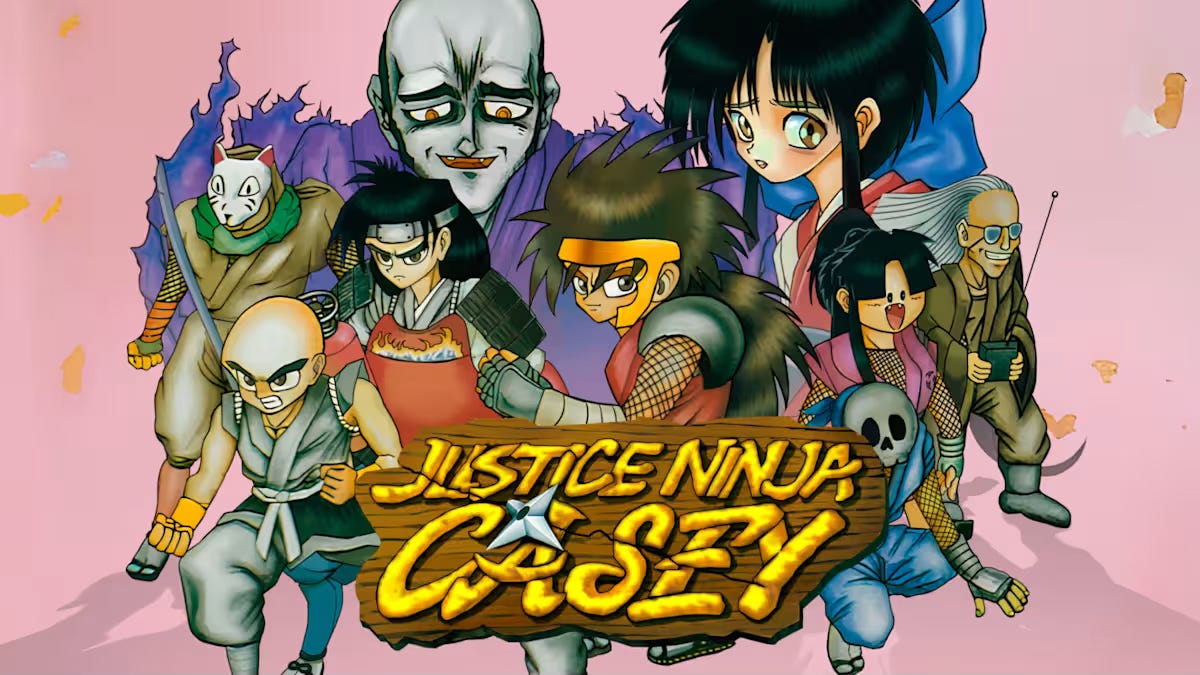
🥷 Justice Ninja Casey, a Super Famicom game, is receiving an official English release for Nintendo Switch. GoNintendo
🦊 Star Fox artist is advocating for Star Fox Assault to be released on the rumoured Switch 2. Retroshell
🕹️ Märchen Maze, a classic arcade game, is getting a modern re-release. NicheGamer
🤖 A remastered version of Mobile Suit Gundam SEED: Battle Destiny has been announced for Switch and PC. Retroshell
🥋 Shinobi: Art of Vengeance is set for an August release, continuing the legendary ninja franchise. Retroshell
🪓 A revitalised Neo Geo port of Golden Axe is now available for players. Retroshell
🕊️ Peter Navy Tuiasosopo, known for portraying E. Honda in the Street Fighter movie, has passed away at age 61. Retroshell
🐄 Save Me Cows, a new action-puzzle adventure for the Game Boy, has been announced. Retroshell
🏎️ F-Zero SNES has received a fan-made Bower League expansion, adding new tracks and challenges. Retroshell
🧱 A massive Mario Kart LEGO set is rumoured to be in development. Retroshell
⚡ Speedrunner Summoning Salt has broken the two-minute barrier in Mike Tyson’s Punch-Out!!. Retroshell
🏙️ Hudson Soft’s lost SimCity mobile game for Japanese phones has been preserved. Retroshell
Features
🎂 Happy Birthday to the Game Boy Advance SP, the stylish handheld that revolutionised portable gaming. Retroshell
🎮 Grand Theft Auto 6 gets an 8-bit NES-style demake TechEBlog
📝 Final Fantasy’s creator acknowledges Dragon Quest as a key influence on the franchise’s development. The Popverse
💰 Berkshire Hathaway once considered acquiring both Nintendo and Activision. Retroshell
🌍 A dedicated fan spent 100 days mapping Super Mario’s entire planet (CreativeBlog)
🧝 Zelda’s Marin set the standard for compelling side characters in gaming. CBR
🏁 Diddy Kong Racing is hailed as the true king of N64 mascot racers. VICE
💎 A broken GameCube was sold for $100,000 due to its rarity and history. Jason Deegan
🚐 A Chevy work van features a custom in-dash Nintendo 64 setup for gaming on the go. The Drive
⭐ Ristar should have been the Sega Genesis mascot instead of Sonic, according to some fans. GameSpot
📈 Retro gaming is experiencing a resurgence, with growing interest in classic consoles and games. COGConnected
🦖 Bobby Kotick aggressively pursued Jurassic Park game rights from Steven Spielberg. Gameranx
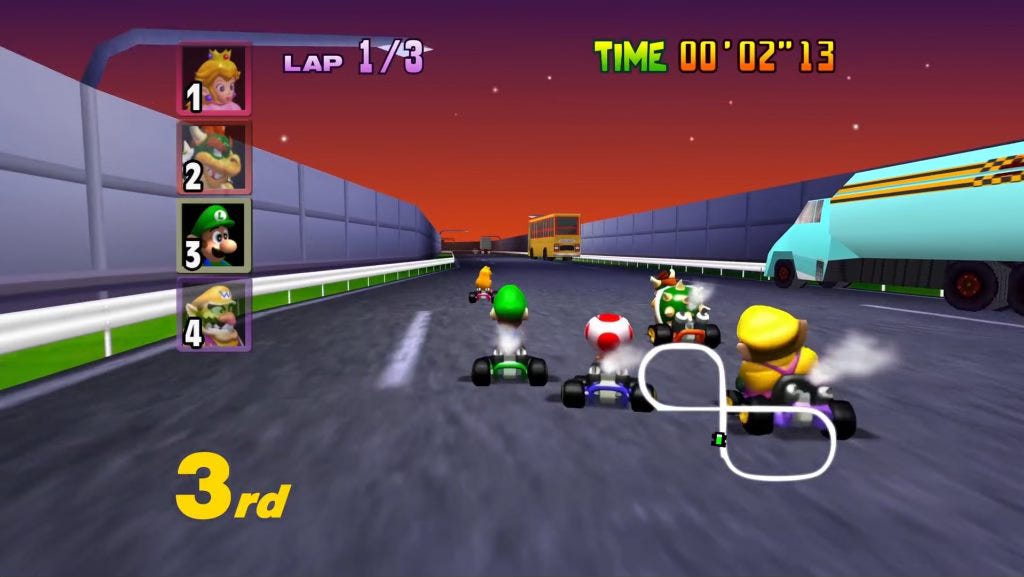
🏎️ Mario Kart 64 celebrates 28 years of friendship-ruining races. Nintendo Wire
🎥 An artist recreates classic movies with PlayStation 1-style graphics.eBaum’s World
🎨 A debate emerges over whether a classic Nintendo console logo is the best ever.Creative Bloq
📺 The Sega Dreamcast has a hidden menu system that many fans never knew about. Time Extension
🌐 A deep dive into the online past of the Sega Dreamcast reveals a fascinating glimpse into its early internet features. Forbes
Lists & Rankings
💰 Retro video games are becoming highly valuable, and collectors should know what makes certain titles rare. SlashGear
📱 The best simulation games on Game Boy Advance are ranked by fun and depth. GameRant
🎮 Every Sega console launch lineup is ranked, comparing the strongest and weakest debuts. CBR
🕹️ 20 legendary video game consoles that revolutionised the industry. Go2Tutors
⚔️ The best turn-based combat systems in Sega games are ranked. GameRant
🤼 The weirdest WWE games that most players overlooked. TheSportster
🔥 The best Capcom games of all time are ranked, celebrating the studio’s greatest hits. Hardcore Gamer
In the world of speedrunning, precision and adherence to rules are paramount. Blindfolded speedrunner Bubzia, renowned for his expertise in Super Mario 64, recently experienced a heartbreaking incident where a technical glitch nullified a near-record-breaking run.
On 10th February 2025, during an attempt to surpass his own blindfolded 70-star world record, Bubzia was on an impressive pace. Approximately 24 minutes into the run, unbeknownst to him, his webcam ceased functioning. In blindfolded speedrunning, continuous visual proof is essential to validate that the player is indeed not seeing the game. Without this verification, runs are deemed invalid. Bubzia, unable to notice the malfunction due to his blindfold, continued the run, ultimately finishing just seconds shy of the world record. It was only after completing the run that he realised the webcam had failed, rendering his effort void.
Yesterday, it finally happened. My webcam died in the beginning of a 70 Star run, and I did not know until I finished an hour later. Luckily, it was a few seconds behind World Record 😅😅 pic.twitter.com/7BJzFwYHVH
This incident underscores the unique challenges faced by blindfolded speedrunners, where not only in-game performance but also reliable equipment play crucial roles in successful attempts.
Preserve your gaming history! Protect your collection with RetroShell, the world’s finest video game protector. And for a weekly dose of retro gaming news, subscribe to our Substack—it’s free!
Introducing the Game Bub, an open-source FPGA-based handheld console designed to play Game Boy, Game Boy Colour, and Game Boy Advance titles. Developed over a year and a half by engineer Eli Lipsitz, Game Bub offers a blend of nostalgia and modern tech, allowing users to enjoy classic games directly from original cartridges or via ROM files stored on a microSD card.
Credit: Eli Lipsitz
A Modern Take on Classic Gaming
Game Bub stands out by supporting physical cartridges, enabling players to relive their favourite games as they were originally intended. Additionally, it offers emulation capabilities, allowing ROM files to be loaded from a microSD card for convenience. The device also features compatibility with the Game Link Cable in both Game Boy and Game Boy Advance modes, facilitating multiplayer experiences.
Feature-Rich Design
Beyond basic gameplay, Game Bub boasts several enhancements:
• Video Output: Connect to larger screens via HDMI through a custom dock.
• Immersive Feedback: Incorporates a rumble motor for tactile responses during gameplay.
• Real-Time Clock: Supports games that utilise time-based events.
• Extensibility: Designed with future expansions in mind, allowing for software updates and additional features.
Technical Specifications
At its core, Game Bub features a custom-designed six-layer PCB housing a Xilinx XC7A100T FPGA with integrated memory. The handheld includes a vibrant display, built-in speakers, a rechargeable battery, and a GB/GBA cartridge slot, all encased in a custom 3D-printed enclosure.
Credit: Eli Lipsitz
Open-Source and Community-Driven
Emphasising accessibility and collaboration, the project’s instructions, code, and design files are available on GitHub. While assembling a Game Bub unit is complex, enthusiasts interested in purchasing a complete kit are encouraged to express their interest through a provided form, aiding in gauging demand for potential production.
Preserve your gaming history! Protect your collection with RetroShell, the world’s finest video game protector. And for a weekly dose of retro gaming news, subscribe to our Substack—it’s free!
‘Ravi and Navi’ has been unveiled as the first new title for the Famicom Disk System (FDS) since 1992. This release breathes new life into Nintendo’s classic console peripheral, which was originally launched in 1986.
The FDS, an attachment for the Nintendo Entertainment System (NES), utilised proprietary floppy disks for game storage, offering expanded memory and the ability to save game progress—features that were groundbreaking at the time. However, with the advent of more advanced gaming technologies, production of FDS games ceased in the early ’90s.
‘Ravi and Navi’ is set to be released on vibrant orange 3D-printed disks, a modern twist that pays homage to the original FDS media. This innovative approach not only captures the nostalgia of the era but also showcases the dedication of the retro gaming community to preserving and revitalising classic gaming experiences.
The game’s development and impending release highlight a growing trend among enthusiasts to create new content for vintage gaming systems. This movement not only honours the legacy of classic consoles but also introduces these timeless experiences to new generations of gamers.
As ‘Ravi and Navi’ prepares to make its debut, it stands as a testament to the enduring appeal of retro gaming and the passion of its community. This release is poised to inspire further interest and development in classic gaming platforms, ensuring that the legacy of consoles like the Famicom Disk System continues to thrive.
Protect and display your retro games with RetroShell, the world’s finest video game protectors. If you are a fan of retro gaming, get all of the news delivered to your inbox each Monday with our free Retro Gaming Substack.