One of the most fascinating pieces of cancelled gaming history, the Super Nintendo CD, is being brought closer to reality thanks to the ambitious work of a single modder, Cosam the Great. If you’ve ever wondered what could have been if Nintendo and Sony hadn’t gone their separate ways, this project may reignite your imagination.
What Was the Super Nintendo CD?
In the early ‘90s, Nintendo and Sony collaborated on a CD-ROM add-on for the Super Nintendo. The project aimed to compete with Sega’s CD drive, offering increased storage and the potential for enhanced audio. However, Nintendo abruptly shifted gears, licensing the technology to Phillips instead, resulting in oddities like the Philips CD-i’s Zelda and Mario games. Ultimately, the Super Nintendo CD project never saw the light of day, but its legacy lived on. Sony, dissatisfied with the turn of events, developed the original PlayStation, forever changing the gaming landscape.
The Resurrection Effort
Now, decades later, Cosam the Great—a name well-known among retro modders—has taken on the Herculean task of recreating the Super Nintendo CD’s hardware. Using the original prototype’s schematics and modern technology, Coam has designed a new PCB (printed circuit board) that mirrors the cancelled console’s layout.
While far from complete, this recreated PCB offers tantalising possibilities. Imagine running homebrew games, integrating CD-based audio, or even creating entirely new titles for a console that never existed. Fans could one day boot up a Super Nintendo CD as though it were 1992 all over again.
The Challenges Ahead
There’s no guarantee this project will ever reach a fully functional state. Reproducing the CD-ROM hardware alone presents significant obstacles, as the original unit was an unfinished prototype with multiple issues. Additionally, there’s limited software for the system—most notably the rare Super BAS Guide, the only known game designed for the Super Nintendo CD.
Still, the modding community has proven its ingenuity time and time again. Coam has already tackled impressive projects, including recreating the Sega Neptune, a hybrid Genesis-32X console that also never made it to market. If anyone can make the Super Nintendo CD playable, it’s them.
Why It Matters
Retro gaming is more than just nostalgia—it’s about preserving the “what-ifs” of gaming history. Projects like this don’t just breathe life into forgotten prototypes; they create opportunities for new creativity. Imagine a world where the Super Nintendo CD could inspire a new wave of games, homebrew projects, or even custom soundtracks.
Whether this project becomes a finished console or remains a proof of concept, it’s a testament to the passion and dedication of the retro gaming community. Coam’s efforts might someday give players the chance to experience a console that once existed only in magazine previews and our collective imagination.
Join our weekly retro gaming newsletter for classic gaming insights, and protect your precious games with RetroShell™ – trusted by collectors worldwide.
February 1990 – A pivotal month in gaming history. Nintendo of America was about to launch what would become one of the most iconic titles in video game history: Super Mario Bros. 3. The excitement was palpable. A game that had already been a sensation in Japan was finally arriving on North American shores. And it wasn’t just a sequel – it was a statement.
Even without the internet, the buzz around Super Mario Bros. 3 had crossed oceans. Magazines were ablaze with previews. A Hollywood movie, The Wizard, showcased its gameplay, introducing millions of kids to a game they’d soon beg their parents to buy. Some shops even sold bootleg copies, a testament to the hunger for Mario’s next adventure.
The Wizard poster
But why did this game matter so much? It wasn’t just another Mario title; it was proof that Nintendo was more than a fad. It solidified Mario as the undisputed king of video games and cemented Nintendo’s dominance during a time when competitors like Sega and NEC were itching to dethrone them.
The Creation of a Masterpiece
Behind the magic of Super Mario Bros. 3 was a team of visionaries led by Shigeru Miyamoto. By the late 1980s, Miyamoto had already redefined gaming with titles like The Legend of Zelda and Super Mario Bros., but he wasn’t ready to rest. This time, he wanted to craft the ultimate Mario experience – a game that would push the limits of the NES and introduce innovations never seen before.
The development team, known as Research & Development 4 (R&D4), was a mix of veterans and fresh talent. With their combined genius, they created a game packed with new mechanics like diagonal scrolling, flight, and themed worlds. The graphics? Bright, colourful, and whimsical. Every detail felt alive, from dancing trees to mischievous enemies like Boos and Chain Chomps.
A fresh-faced Miyamoto in his 30’s working on SMB3
A Whole New Mario World
Gone were the linear levels of the past. Super Mario Bros. 3 introduced the overworld map, letting players choose their path. This added depth to the gameplay, making every playthrough feel unique. And the power-ups? Legendary. The raccoon suit gave Mario the ability to fly, while the frog and hammer suits added entirely new dimensions to the game.
Every element of the game had a purpose. The music, composed by Koji Kondo, was a genre-blending masterpiece that perfectly complemented the gameplay. From its upbeat reggae influences to its iconic jingles, the soundtrack remains unforgettable.
The Marketing Juggernaut
Nintendo didn’t just release Super Mario Bros. 3 – they turned it into an event. The marketing campaign was colossal, costing $25 million. Commercials dominated TV screens. McDonald’s sold Mario-themed Happy Meals. Even The Wizard, a movie many dismissed as a Nintendo commercial, helped fuel the hype.
When the game finally launched in North America in February 1990, it was chaos. Stores couldn’t keep up with demand. Within two days, 250,000 copies were sold. By the end of the year, Nintendo had sold over eight million units in North America alone.
I still remember this advert.
A Legacy That Endures
Super Mario Bros. 3 wasn’t just a game; it was a cultural phenomenon. It proved that video games could be sprawling adventures filled with secrets, challenges, and joy. Its influence stretched far beyond Nintendo, inspiring competitors like Sega to create their flagship franchises (hello, Sonic the Hedgehog!).
Even decades later, Super Mario Bros. 3 remains a beloved classic. It’s a game that defined a generation and continues to be a touchstone for gamers worldwide. Whether you grew up with it or discovered it later, one thing is certain: Mario’s third adventure is a testament to what video games can achieve.
If you are a retro gaming fan, sign up for our weekly free newsletter for all the latest news delivered to your inbox each Monday, and if you collect NES/SNES games, be sure to protect these treasures with our range of the worlds finest game display protectors.
Cheat codes and gaming go hand in hand. They’re like secret handshakes that give players the power to bend the rules of a game, transforming frustrating challenges into triumphant victories or just adding a bit of chaotic fun. But where did this culture of gaming cheats originate? Much of it can be traced back to a humble yet groundbreaking device that emerged in the early 1990s: the Game Genie.
This magical little accessory redefined the gaming landscape, introducing players to the wild world of customisable gameplay through cheat codes. Let’s dive into the story of the Game Genie, from its scrappy beginnings to its legendary legacy.
The Birth of a Genius Idea
In the late 1980s, Codemasters, a British gaming company known for its innovative spirit, sought to collaborate with Nintendo to create an officially sanctioned product. The company’s founders, Richard and David Darling, were keen to harness their creative energy in partnership with the console giant. However, Nintendo wasn’t interested. For many, that rejection might have marked the end of the story. For the Darlings, it was just the beginning.
Spurred on by the snub, Codemasters teamed up with a programmer named Ted Carron, who successfully reverse-engineered Nintendo’s security features. The result was the Game Genie, a device that allowed players to manipulate games on their own terms. It wasn’t just about beating the game; it was about playing it your way.
How the Game Genie Worked
The Game Genie wasn’t just a plug-and-play accessory; it was a gateway to a new dimension of gaming. Functioning as an intermediary cartridge, players would insert their game into the Game Genie, which then plugged into their console. Upon startup, the device intercepted the game’s code, allowing users to input 3-5 cheat codes. These codes, which had been meticulously tested by a team of developers called Codebusters, could alter various aspects of the game.
Want infinite lives in Super Mario Bros.? No problem. Fancy moon gravity in Sonic the Hedgehog? You’ve got it. The Game Genie turned console gaming into a playground of possibility.
But how did these codes work? Essentially, the device modified the values stored in the game’s memory. This process, though straightforward today, was a technical marvel in its time, requiring hours of trial and error to discover which bits of data corresponded to certain game functions.
A Legal Showdown with Nintendo
Of course, not everyone was thrilled about the Game Genie’s existence. Nintendo, notorious for its tight grip on intellectual property, saw the device as a direct threat. The company claimed that the Game Genie created unauthorised derivative works and sued Galoob, the distributor of the Game Genie in the US, along with Codemasters.
The case was nothing short of a spectacle. Nintendo argued that altering their games violated copyright law, while Galoob and Codemasters contended that the Game Genie merely modified how games were played, not their underlying code.
In a landmark ruling, the court sided with Galoob and Codemasters, establishing a critical precedent: players had the right to modify games they legally purchased. The court even ordered Nintendo to pay $15 million in damages and legal fees, a bitter defeat for the gaming giant.
This legal victory wasn’t just a win for Codemasters—it was a win for gamers everywhere, solidifying the concept of player agency and laying the groundwork for the modding communities we see today.
The Commercial Triumph
Despite the legal drama, the Game Genie was a massive commercial success. By 1992, it had generated a staggering $65 million in revenue for Galoob, and by the end of its lifecycle, approximately 5 million units had been sold. The device was released for five major platforms:
Each version opened up new realms of possibilities for players, making the Game Genie a must-have accessory for those who wanted to take their gaming experience to the next level.
Unfulfilled Potential: The Game Genie 2
While the Game Genie was a runaway success, its story isn’t without a few “what-ifs.” Codemasters had plans for a Game Genie 2, a device that promised advanced features like user-discoverable codes and conditional cheats. Unfortunately, the rapidly changing gaming market, coupled with the rise of newer consoles, meant that the second iteration never made it to store shelves.
It’s fascinating to imagine what could have been. A Game Genie with the ability to let players create their own codes would have been a game-changer—pun intended.
Legacy: More Than Just Cheats
The Game Genie’s impact extends far beyond its initial success. It inspired a wave of similar products, such as the GameShark and Action Replay, which brought their own innovations to the table. More importantly, the legal battle surrounding the Game Genie helped define the rights of players and the boundaries of intellectual property law in gaming.
Even today, the spirit of the Game Genie lives on. Modding communities owe a debt to this little device, as it was one of the first to empower players to modify their games. The cheat culture it popularised has evolved into a vibrant ecosystem of mods, hacks, and customisations that keep old games alive and make new ones even more exciting.
The Cheat Code Culture
It’s easy to dismiss cheat codes as relics of the past, but they remain an integral part of gaming culture. From the Konami Code to modern Easter eggs, the ethos of bending the rules in creative ways is as popular as ever. Speedrunners exploit glitches to achieve record-breaking times, and modders build entire new worlds within existing games.
The Game Genie wasn’t just a tool—it was a cultural phenomenon that encouraged players to think outside the box and explore what gaming could truly be.
Conclusion: A Genie Worth Remembering
The Game Genie was more than a gaming accessory; it was a statement. It told players that games weren’t just static experiences to be consumed—they were dynamic worlds to be shaped, explored, and personalised. Whether it was infinite ammo in Contra or high-jump shenanigans in Mega Man, the Game Genie brought joy, creativity, and a touch of chaos to every game it touched.
Its legacy is felt in every cheat code, every mod, and every gamer who’s ever asked, “What if I could play this my way?” The Game Genie may have been a product of the 1990s, but its influence is timeless.
If you are a game collector, and you want the finest protectors to display and protect your retro treasures, be sure to protect them with RetroShell, the worlds best game display protectors.
Keep playing—and never stop dreaming of what’s possible.
In the heart of Tokyo at the SIGGRAPH Asia 2024 conference, a remarkable endeavour was unveiled, one that delves into the rich cultural tapestry of video game creation. Four leading companies in the gaming world – Square Enix, Capcom, Taito, and Sega – have embarked on a journey to archive their historical development materials, transforming what was once deemed expendable into precious historical treasures for research and exhibition.
The Cultural Significance of Gaming Archives
Video games have evolved from mere pastimes to cultural phenomena, with their development materials from the 80s and 90s, like blueprints and sketches, becoming pivotal historical items. These artefacts provide insights into how games were conceptualized and crafted, fostering an understanding of the evolution of video game design, technology, and art.
Square Enix’s Trailblazing Archival Work
Square Enix, led by AI researcher Yoichiro Miyake, has been at the forefront of this archival movement. Since 2019, Miyake has been exploring the archives of Enix before its merger with Square, revealing materials previously undocumented. This discovery likened to finding a “treasure trove,” has sparked a project to digitize and manage these assets for future use, involving the photographing of physical items and their conversion into digital formats for research.
Capcom’s Archival System – CIAS
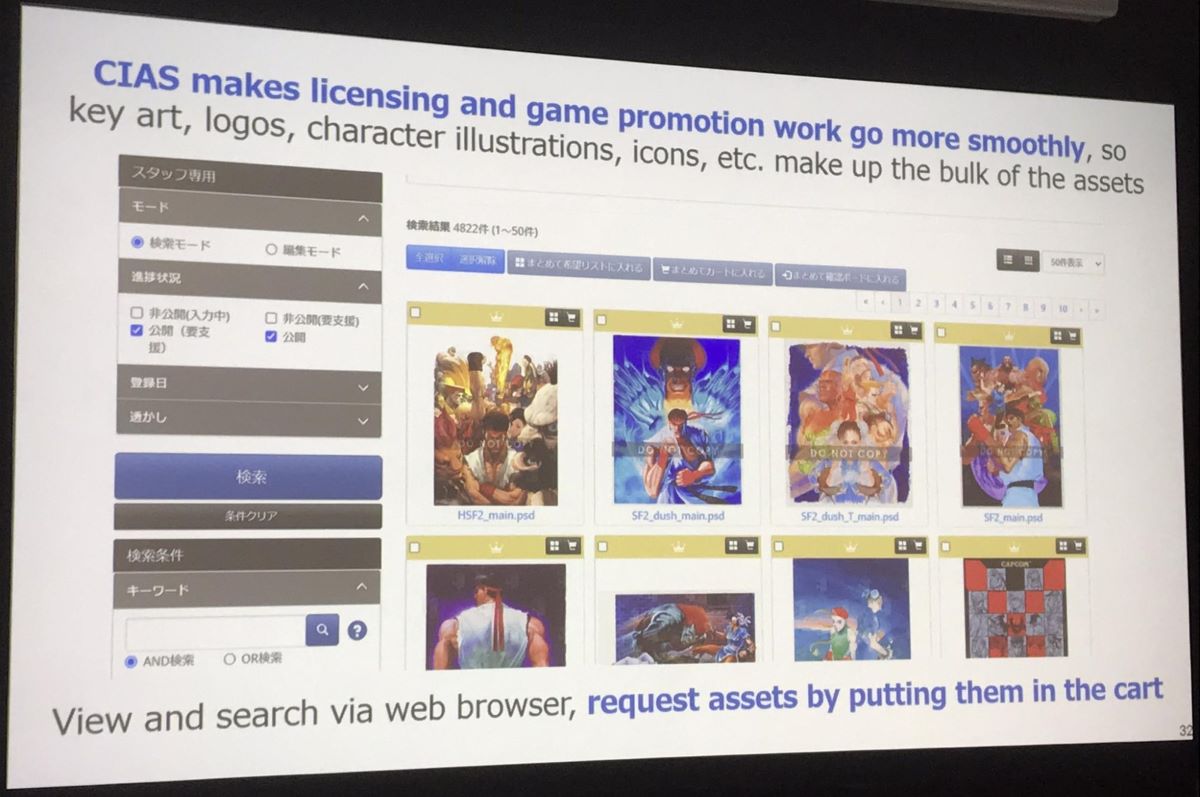
Capcom has developed the Capcom Illustrations Archives System (CIAS) to manage its historical assets, focusing on art and design elements for games like “Street Fighter” and “Rockman.” This system not only preserves these assets but also leverages them for current marketing and game development, showcasing a practical application of historical preservation.
Taito’s Challenges and Triumphs in Legacy Preservation
Taito, with its roots deep in arcade gaming history since 1953, faces unique challenges in preservation, including space and material deterioration. Despite these obstacles, they maintain a vast archive of arcade hardware, software, and even microfilms, which they proudly display at events commemorating their legacy.
Sega’s Recent Dive into Preservation
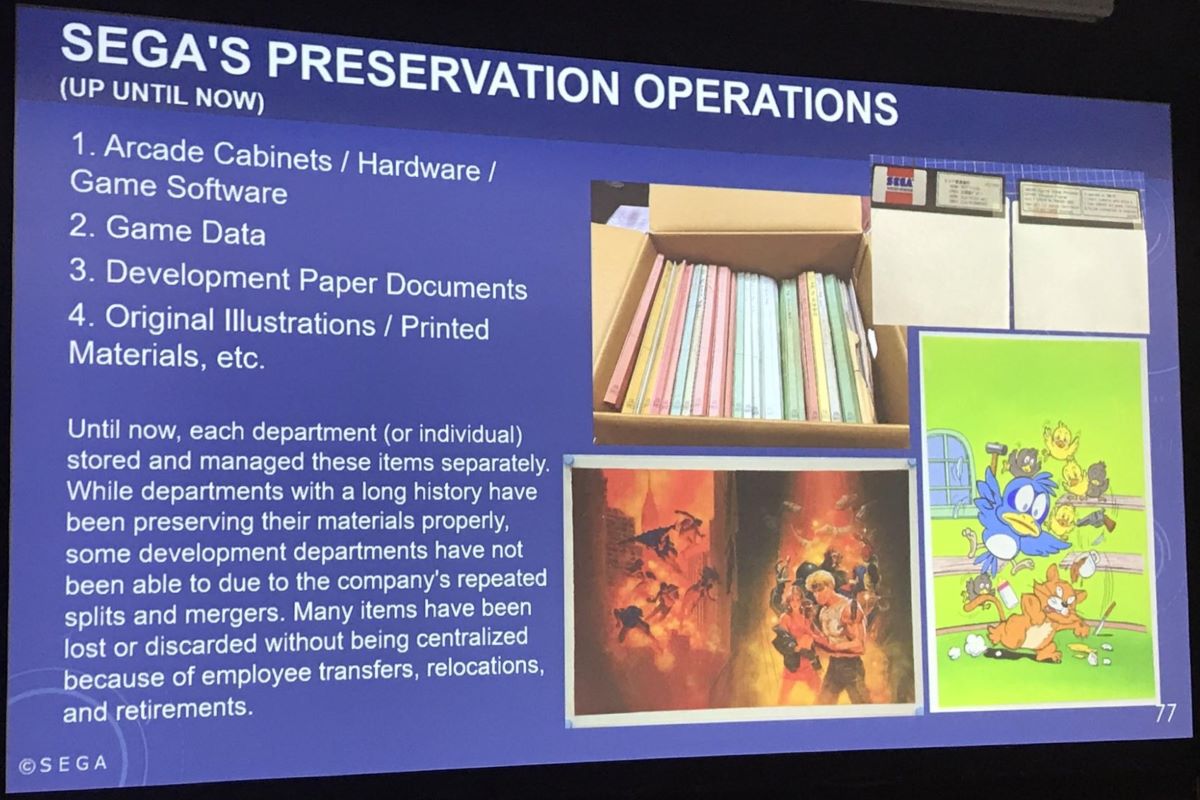
Sega, starting its preservation efforts in 2023, is now aggressively digitizing and cataloguing its past, from arcade machines to original artwork. This initiative includes plans to incorporate materials from subsidiaries like Atlus, aiming to create a comprehensive historical database.
Preserving the Physical: The Role of Game Boxes
The physical packaging of games, especially from the golden age of consoles like the NES and SNES, holds significant cultural and artistic value. These boxes are not just containers but pieces of art that reflect the era’s design and marketing ethos. Preserving them is crucial for collectors and historians to experience games as they were initially presented. For those keen on safeguarding these relics, RetroShell (www.retroshell.com) provides an array of display protectors designed to keep your collection safe from environmental damage, ensuring these artefacts can be enjoyed for years to come.
The Broader Impact of Preservation
The collective effort by these companies underscores a commitment to not just preserve history but to use it as a foundation for future innovation. This archival work teaches us about our past, informing current and future creators while also celebrating video games as cultural artefacts.
Envisioning the Future
As articulated by Yoichiro Miyake, the preservation of these materials is about building a bridge between generations of creators. By maintaining these archives, the industry ensures a continuous dialogue that honours its history while paving the way for future advancements.
This initiative highlighted at SIGGRAPH Asia 2024 not only showcases the industry’s dedication to cultural heritage but also serves as a model for preservation across various fields, safeguarding a slice of digital culture for future generations to study and enjoy.
The preservation of video game history often focuses on early builds and prototypes, but an equally valuable source lies in the documentation surrounding a game’s development. Recently, the Video Game History Foundation was gifted a remarkable collection of documents and files from Michael Manheim, a game developer whose career spans decades with companies like Sunsoft, EA, and 3DO. Among the gems of this collection are detailed records of Army Men: Sarge’s Heroes, revealing fascinating insights into its development.
Nine Fascinating Facts About Sarge’s Heroes
1. A Lightning-Fast Development Cycle
From pitch to store shelves, the development of Sarge’s Heroes took only 18 months—a remarkable feat considering it was one of five Army Men titles released in 1999.
2. Inspired by Tomb Raider and GoldenEye
Drawing inspiration from console hits like Tomb Raider and GoldenEye, the game shifted the series’ focus from strategy to a character-driven adventure, tailored for home consoles.
3. Simplified Gameplay for Development Feasibility
Initial ambitious plans included squad mechanics, vehicle controls, and co-op campaigns. Many features were cut to meet deadlines, though echoes of these ideas appeared in later titles.
4. The Creation of Vikki
The design of Vikki, the series’ lone female character, faced unique challenges. Early concepts struggled to balance her role as a character and as an appeal to the target audience.
5. Built with the N64 in Mind
The original pitch firmly positioned Sarge’s Heroes as an N64-focused title, leveraging the console’s strengths in rendering expansive 3D environments and supporting four-player split-screen gameplay.
6. A Name from Trip Hawkins
The name Sarge’s Heroes was suggested by EA and 3DO founder Trip Hawkins, aiming to give the game a unique identity while hinting at its narrative focus.
7. Robin Williams as Sarge?
Robin Williams, an avid gamer, was once considered for the role of Sarge. Ultimately, the character was voiced by the prolific Jim Cummings.
8. Aiming for a Multimedia Brand
Plans for Sarge’s Heroes extended beyond games to include action figures, a television series, and even a feature film. While some of these plans were unrealized, the IP became a cornerstone of the Army Men franchise.
9. Nintendo’s Behind-the-Scenes Input
Rare glimpses into Nintendo’s internal testing feedback highlight the depth of their involvement. Suggestions for graphical tweaks and design refinements helped shape the final product.
Why This Matters to Retro Gaming Enthusiasts
The insights from Manheim’s documents illustrate the creative and technical challenges of game development in the late 1990s. From ambitious pitches to hard decisions on cuts, these stories enrich our understanding of gaming history. Collectors and fans of retro gaming can also find joy in preserving these relics, much like the cartridges and consoles themselves.
Protect and Showcase Your Gaming Memories
For collectors of retro games like Army Men: Sarge’s Heroes, keeping your treasures in pristine condition is key. RetroShell’s protective cases provide durable, high-quality storage to safeguard your collection while showcasing your love for classic gaming.
Support the Video Game History Foundation
To continue exploring and preserving video game history, consider supporting the Video Game History Foundation through their YouTube channel or Patreon. Every contribution helps keep the stories of our gaming past alive.